This guide explains how to use an Ageism Questionnaire to detect age-based bias in workplaces and public services. It then provides objective background on what “ageism” means, why structured measurement matters, and how organizations can translate results into fairer policies and training grounded in reliable research and common compliance principles.
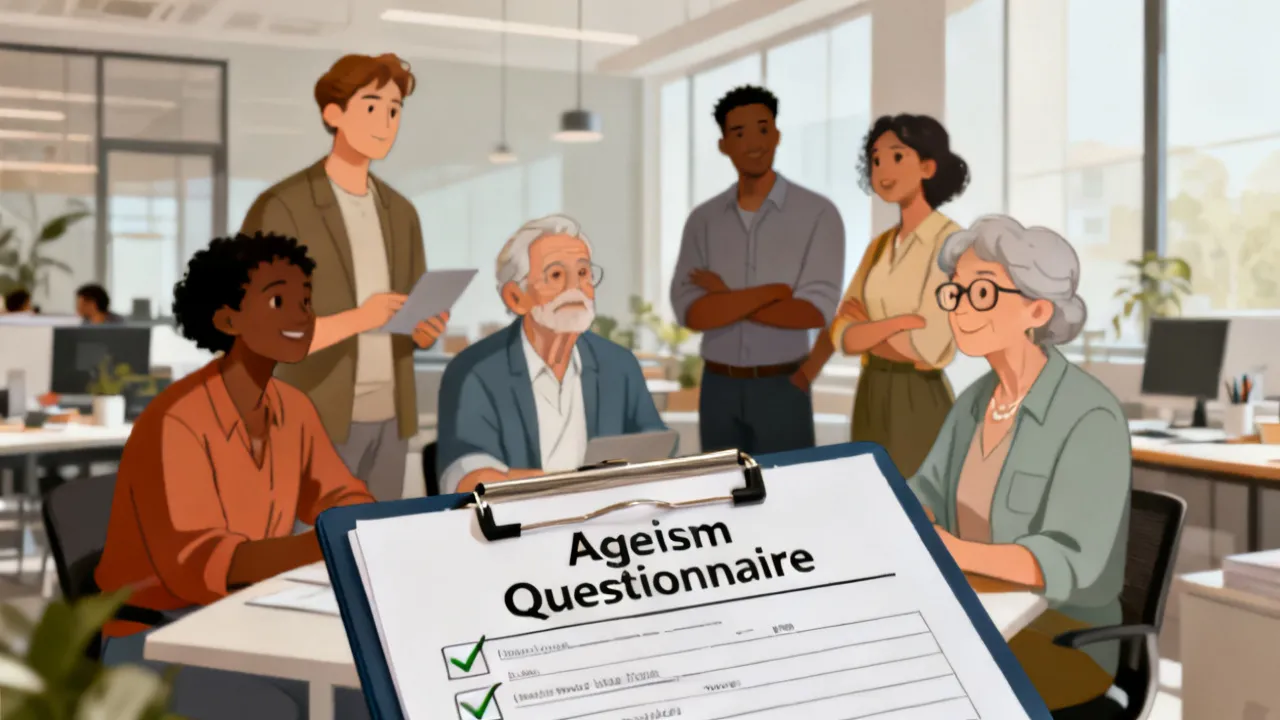
An Ageism Questionnaire is a practical, structured tool for identifying where age-related stereotypes or unequal treatment show up in everyday decisions—hiring, performance reviews, promotions, training access, onboarding, and even informal interactions. Instead of relying on anecdotes alone, it helps organizations gather consistent input, compare patterns across departments, and choose targeted interventions. Used responsibly, it supports more equitable systems for employees and service users.
Fairness is not only a stated value; it is a lived experience. People judge fairness by how predictable and respectful the system feels: Do decisions follow consistent criteria? Are opportunities distributed without hidden assumptions about “fit,” “energy,” “adaptability,” or “readiness”? Do managers and colleagues communicate in a way that assumes competence regardless of age? In many organizations, the answers vary widely by team, location, or leadership style—especially when decision processes are mostly informal. An ageism questionnaire makes these inconsistencies visible, creating a baseline that leaders can use to evaluate whether the organization’s day-to-day practices match its commitments.
Just as importantly, an Ageism Questionnaire gives organizations a way to act on fairness concerns without immediately treating them as accusations against specific individuals. That distinction matters. When employees feel that their concerns will lead to punishment or retaliation, they often stop speaking up. When leaders respond defensively, they miss the underlying process issue. A questionnaire, if designed and administered ethically, can transform vague complaints into measurable patterns that can be investigated through policy and process review. That approach helps the organization focus on improvements—standardized criteria, better manager guidance, clearer escalation routes—rather than on blame.
In addition, the questionnaire can support governance. Many fairness initiatives fail because they are documented poorly or depend on informal efforts that are hard to measure. A structured questionnaire produces a record of what employees or service users experienced or perceived over a defined timeframe. When paired with corroborating evidence—HR process records, training logs, grievance themes, or service response metrics—questionnaire results become stronger inputs into continuous improvement and accountability practices.
Finally, ageism is often subtle. Unlike overt discrimination, it can hide behind everyday language and seemingly neutral policies. For example, “We need someone who can handle fast pace and new technology” may be true in a specific role, but the same phrase may be applied differently across age groups. Or “They seem like they’re almost ready to retire” may drive decisions about project assignments, visibility, mentorship opportunities, or willingness to invest in development. An ageism questionnaire helps organizations detect these subtle differences by capturing how people experience and interpret the system.
Ageism refers to prejudice or discrimination based on a person’s age. In workplaces, it may appear as assumptions about learning speed, adaptability, physical capability, leadership potential, or “cultural fit.” In public-facing services, it can present as dismissive communication, reduced responsiveness, or barriers to participation. The key objective behind an Ageism Questionnaire is to surface these patterns in a way that is measurable and actionable.
In practical settings, ageism may not always look like direct rejection. It can also show up as differential treatment that affects outcomes over time. For instance, a company may not explicitly exclude anyone due to age, but it may:
In services, ageism can also appear as unequal access to information, slower response times, or diminished respect during communication. Examples include not explaining options clearly to older clients, assuming they do not understand digital channels, or treating younger clients as unreliable without evidence. In both workplace and service contexts, ageism often overlaps with other issues: disability, language proficiency, socioeconomic factors, caregiving responsibilities, or health needs. That overlap is another reason measurement must be careful—questionnaires should be designed to capture age-related experiences while not confusing them with unrelated disadvantages.
Importantly, ageism can affect people at both ends of the age spectrum. Many organizations assume ageism primarily concerns older employees. But younger workers can also face age-based assumptions such as being “too new,” “too inexperienced,” or “not ready for leadership.” People in their late 20s or early 30s may be treated as disposable in roles that require maturity, while people in their 40s or 50s may be treated as less innovative or less willing to adopt new processes. A good Ageism Questionnaire therefore captures a range of experiences across age groups, focusing on fairness of opportunity and respect rather than only on protected status.
From an industry perspective, the strongest use cases for an Ageism Questionnaire are:
These use cases tend to be high-impact because they align measurement with decisions. A questionnaire is most valuable when it connects to a specific “system lever”—for example, an interview scoring rubric, a training eligibility process, a promotion calibration meeting, or a customer support workflow. If a questionnaire is used as a standalone exercise—something that collects complaints but does not lead to any process change—its credibility drops quickly. Employees stop trusting that participation matters.
Baseline assessments can also help organizations avoid confirmation bias. Leaders often “know” where the problem is based on past experience. But patterns sometimes emerge in unexpected areas. For instance, an organization might focus on hiring, but employees report that age-related unfairness is more pronounced in development opportunities or project allocation. Baseline data allows leaders to prioritize with evidence rather than assumptions.
Risk identification is also crucial when an organization is scaling rapidly. During expansion, processes become more complex: more managers, more locations, more new hires, and more variation in how teams run performance reviews. Age-related bias can enter through inconsistent interpretation of policies. A questionnaire helps detect where the system is drifting.
Program evaluation is another high-value use case. If an organization runs a manager coaching program or introduces standardized performance review criteria, it needs to know whether the change reduced the experiences captured by the questionnaire. Otherwise, training may become performative: it looks like action, but it does not improve outcomes. Measuring again after implementation—using the same or comparable items—supports continuous improvement.
Inclusive policy design benefits when organizations use questionnaire insights to refine policy language and workflow steps. For example, if respondents indicate that adjustments are handled inconsistently, leaders may develop clearer guidelines on when and how adjustments should be requested, approved, communicated, and reviewed. Policy updates become more targeted because they respond to real experiences rather than generic compliance thinking.
Finally, governance and documentation help ensure that fairness work survives leadership changes and organizational restructuring. When a questionnaire is well documented—methodology, response rates, timing, analysis approach, and actions taken—it becomes a governance artifact that shows accountability over time.
In consulting and HR analytics, a recurring lesson is that questionnaires can fail when they are either too vague to interpret or too loaded to respond to honestly. A well-designed Ageism Questionnaire should clarify scope (workplace vs. service context), define the timeframe (e.g., “recent months”), and phrase items in neutral language that reduces defensiveness while encouraging accurate reporting.
Consistency matters because it allows comparison across time and across groups. If one department answers with one interpretation of an item and another department answers with a different interpretation, the resulting pattern may reflect confusion rather than real experiences. That is why item design, piloting, and reading-level checks are important. The questionnaire should be accessible and culturally sensitive, using plain language that respondents can understand quickly.
Respect matters because respondents are sharing potentially sensitive experiences. The questionnaire should feel safe. It should not imply that respondents must “prove” discrimination to be heard, nor should it force them to choose between options that do not reflect their reality. For example, a respondent may feel they were treated unfairly but is not sure whether age was the cause. A good design allows them to express the experience (e.g., “I was treated less respectfully” or “I was excluded from opportunities”) without requiring them to make legal determinations.
Just as importantly, analysis should distinguish between:
These distinctions help leaders avoid misinterpretation. Perceived experiences are valid data; they reflect how the system is experienced. But observed practices and context factors help explain “why” the experience occurred. In some cases, perceptions may not match policy documentation exactly, which can indicate communication gaps (e.g., policies exist but are unclear). In other cases, perceptions align with operational patterns, indicating a true process issue.
In practice, expert teams often create an analysis approach that maps questionnaire themes to operational processes. For example, if the theme is “unequal development opportunities,” the analysis may examine training access logs, nomination processes for mentoring, and manager approvals. If the theme is “dismissive communication,” the analysis may examine customer support scripts, call monitoring, coaching materials, and escalation pathways.
Experts also emphasize that the questionnaire should include multiple item types: frequency statements (e.g., “In the last six months, I experienced…”), agreement statements (e.g., “My manager treats people with respect regardless of age”), and scenario-based items (e.g., “In a typical project allocation decision, I believe…”). Scenario-based items can reduce ambiguity because they anchor respondents in a realistic situation. However, scenario items must be carefully written to avoid leading the respondent toward a preferred conclusion.
A credible Ageism Questionnaire typically produces results you can act on. For example, you may identify that younger staff report unequal access to training, or that older employees report being excluded from high-visibility projects. The value is not the number alone; it’s the pattern and the associated drivers that can be reviewed.
To understand what to expect, it helps to consider how questionnaires translate “raw responses” into decisions. You generally look for:
When implemented well, the questionnaire becomes a diagnostic tool rather than a judgment tool. It helps leaders prioritize investigations and design targeted improvements.
For example, consider the theme “feedback practices.” Respondents might report that they receive less frequent or less specific feedback. That might correlate with age because managers might perceive certain employees as “already set in their ways.” But the deeper driver might be that feedback is tied to performance cycles that are handled differently by managers, or that calibration meetings encourage certain managers to reduce specificity. The questionnaire tells you what employees experience; process review tells you what system changes could fix it.
Another example is training access. Employees might report that training opportunities were offered based on “readiness” assumptions. The questionnaire could reveal that certain roles are systematically excluded from training. The organization can then examine nomination criteria, eligibility rules, or approval workflows. It may find that eligibility rules are age-neutral on paper, but the approval workflow includes subjective steps that correlate with stereotypes. In that case, the solution may be standardizing approval steps and training managers on objective criteria.
Finally, a properly administered questionnaire often increases trust. Even if the first cycle reveals problems, employees see that the organization is willing to measure and respond. Trust grows when employees observe follow-through—changes in process, clear communication, and visible improvement over time.
When teams treat the Ageism Questionnaire as a starting point—not the finish line—common next steps include:
Translating outcomes into action requires translating themes into operational “levers.” If the questionnaire indicates unequal access to projects, then leaders should examine project assignment processes: How are projects allocated? Who proposes candidates? What approvals are needed? Are there constraints that might be age-neutral but interpreted differently? Perhaps project assignment depends on manager nominations, and some managers over- or under-include certain age groups based on assumptions about stamina, flexibility, or adaptability.
If the theme is communication and respect, the organization might need to address everyday behaviors that are not captured in formal HR policies. That could include manager coaching on communication style, clarifying expectations for respectful interactions, improving how feedback is delivered, and ensuring that customer-facing teams receive consistent guidance on how to communicate across age groups.
Standardizing evaluation is often critical. Many unfairness patterns are reinforced by processes that rely too heavily on subjective judgments. For example, performance reviews may ask managers to decide whether an employee “demonstrates leadership maturity” or “fits our culture.” These concepts are legitimate but can become biased without clear behavioral definitions. Rewriting review criteria into observable competencies—problem solving, collaboration, delivery, customer impact, technical skill—reduces room for stereotypes.
Manager enablement should be tailored to the exact themes revealed. Generic bias training can help, but it often underperforms when it is disconnected from the organization’s specific decision points. Better is to use questionnaire findings to develop targeted manager coaching: for example, how to provide equitable development opportunities, how to run performance calibration fairly, or how to avoid “readiness” assumptions when nominating employees for leadership programs.
Escalation routes are also crucial. A questionnaire might reveal that respondents are hesitant to report concerns or believe nothing changes. Without a clear escalation pathway and visible follow-through, employees may disengage. Leaders should define how concerns are received, who investigates, timelines for responses, and how outcomes are communicated while protecting confidentiality.
Another action lever is governance: implementing a regular process audit. Questionnaire findings may reveal patterns in one area, but organizations can prevent recurrence by auditing processes annually. For example, auditing promotion criteria for consistency, reviewing training eligibility and utilization by role and region, or monitoring onboarding and mentorship assignments. When organizations treat fairness as a process quality issue, improvements become sustainable.
Questionnaire data can be misread if organizations assume that agreement with an item automatically proves intentional discrimination. An objective approach treats results as signals—then corroborates using policy review, focus groups, and process auditing.
Credibility is built through methodological transparency and responsible interpretation. “Signal” means the data indicates where to look, not that it proves a specific legal conclusion. For example, respondents may report feeling excluded from opportunities because of age. That is meaningful. But leadership should examine process evidence: What are the criteria? Who makes decisions? Were decisions documented? Are there procedural inconsistencies? Were certain groups systematically not considered for development or project assignment?
Additionally, privacy and anonymity must be handled carefully. If participation is not protected, employees may hesitate to report sensitive experiences. This is not only a matter of ethics; it affects data quality, too.
Ethical handling includes:
Ethics also includes respectful follow-up. If respondents share concerns, they should see reasonable follow-through. That does not mean every issue can be solved immediately, but it does mean leaders should communicate what will happen next. If the organization chooses not to act on a theme—perhaps because it is not within their control or requires longer-term change—they should explain why in a way that respects the effort respondents invested.
Another potential misinterpretation is over-attributing causality to correlations. A questionnaire may show that certain age groups experience more unfairness, but it might be influenced by other factors such as tenure distribution, job type, remote access differences, or regional management culture. Analysis should consider these context factors and avoid simplistic narratives.
In some cases, questionnaire results might be influenced by recent events. For example, if leadership changed policies recently or if a restructuring occurred, respondents might report unfairness during the transition. Leaders should interpret results in the context of organizational changes occurring in the defined timeframe. A well-designed questionnaire includes timeframe definitions and possibly a set of items that identify whether unfair experiences cluster around major events.
The following comparison and guide are designed to help teams implement an Ageism Questionnaire methodically. It should be adapted to your organizational context, local regulations, and stakeholder expectations.
| Implementation Stage | Goal | Recommended Condition/Requirement | Outputs You Should Expect |
|---|---|---|---|
| Scoping | Define where age-related bias is very likely to occur | Clarify context (workplace, recruitment, service delivery) and timeframe | Questionnaire brief and governance plan |
| Item Design | Capture experiences without leading respondents | Use neutral phrasing and role-relevant scenarios; pilot test for clarity | Validated item set and reading-level confirmation |
| Sampling and Access | Ensure results represent the organization fairly | Provide equitable access across teams; monitor response rates by segment | Participation report and representativeness check |
| Administration | Collect data safely and consistently | Guarantee anonymity where feasible; set clear participation communications | Completed responses and audit trail |
| Analysis | Identify patterns and probable drivers | Use consistent scoring; avoid over-attributing causality to correlations | Theme map, sub-group comparisons, risk indicators |
| Corroboration | Confirm questionnaire signals with operational evidence | Cross-check with policy review, grievance trends, training records | Evidence summary and prioritized hypotheses |
| Intervention Planning | Choose targeted actions tied to detected issues | Align actions to decision points (e.g., hiring, appraisal, training access) | Action plan with owners and timelines |
| Follow-Up and Evaluation | Measure change over time | Repeat at planned intervals; track effect alongside process metrics | Post-intervention results and lessons learned |
While the exact items in an Ageism Questionnaire vary by industry, experienced practitioners often include themes such as:
To make these themes actionable, it is helpful to define what “fair experience” looks like. For example, “performance evaluation fairness” can include whether feedback is specific, whether rating criteria are applied consistently, whether opportunities to address performance concerns are available equitably, and whether communication is respectful. “Development fairness” can include transparent criteria for training eligibility, consistent nomination procedures for high-impact programs, and timely access to onboarding resources for new hires across age groups.
Organizations can also include items that detect subtle forms of bias. For example:
In customer service contexts, themes may translate into items such as clarity of communication, respectfulness of responses, willingness to explain options, responsiveness to requests, and access to digital channels when appropriate. In some services, age-related unfairness may involve not offering reasonable alternatives or adjusting communication style to meet the person’s needs.
Because ageism can overlap with disability or health needs, it can also help to include “separation” items that reduce confusion. For instance, items can distinguish between “age-based assumptions” and “needs-based adjustments.” A respondent might need adjustments due to health conditions rather than age itself. A good questionnaire design clarifies this by focusing on the decision rationale: Were adjustments requested or offered respectfully and based on actual needs, or were they handled in a way that implies low capability or reduced value?
You may see vendors offering “questionnaire services,” survey platforms, translation, or assessment analytics. However, specific price and supplier details should be validated with the vendor directly, because costs vary by features, volume, governance requirements, and professional services. In procurement terms, compare proposals using clear criteria such as:
If your organization is considering purchasing an Ageism Questionnaire solution, request written documentation covering security measures, data processors, and how results can be audited. This reduces procurement risk and avoids misunderstandings later.
Procurement should also consider whether the vendor supports the ethical requirements specific to fairness measurement. For example, you should ask about:
Even if you select a platform provider, the content and governance still matter. A survey tool alone does not create fairness; the organization must use the results responsibly. Vendor proposals should include support for analysis design, ethical communications planning, and post-survey action planning workflows.
Age discrimination and age-related prejudice are widely documented in policy and academic literature. The following references are provided as an evidence-oriented foundation for understanding why structured measurement and organizational action matter:
Note: Exact statistical claims should be taken directly from these bodies’ latest reports and updated datasets; avoid relying on outdated figures or unverified industry “benchmarks.”
Because ageism spans both public health framing and labor market outcomes, it can be useful to incorporate insights from both domains when designing a questionnaire. Public health approaches emphasize the social consequences of stereotypes, while labor market research emphasizes hiring, retention, and earnings impacts. Translating these insights into questionnaire items can help ensure that measurement is not only about fairness perceptions but also about the practical effects on participation, access to resources, and long-term career trajectories.
Evidence-based questionnaire design also benefits from academic research on bias measurement and survey methodology. For example, research can inform strategies to reduce socially desirable responding, minimize leading language, and improve the reliability of scenario items. Governance-oriented frameworks can inform ethical handling, documentation, and follow-up evaluation.
When organizations cite external sources for internal policy framing, they should ensure that references are current and consistent with the local legal environment. Legal definitions of discrimination and protected characteristics may vary across jurisdictions, and operational fairness practices should align with those definitions.
Select one that matches your context (workplace vs. public-facing service), your decision points (hiring, promotion, training, appraisal), and your governance needs. A strong questionnaire is clear about timeframe, encourages honest responses, and provides results that can be connected to specific process changes.
To choose well, teams typically start with mapping the organization’s “fairness journey”—from recruitment to onboarding to development to evaluation and eventual transitions. Where decisions are made, ask: What behaviors or judgments could reasonably be affected by age stereotypes? That mapping becomes the blueprint for questionnaire themes. Next, ensure the tool supports segmentation that aligns with your analysis goals—without violating anonymity. Finally, confirm that the design includes a plan for follow-up action. A questionnaire should not be evaluated only on user experience; it should be evaluated on what it enables your organization to do next.
No. Ageism affects people across age groups. The questionnaire should be designed to capture age-related experiences and perceptions from any participant, including younger workers who may report being dismissed as “too inexperienced” or “not a fit.”
This point is important for both fairness and accuracy. If only older employees are invited or if questions assume bias is one-directional, younger participants may feel excluded or misrepresented. They may also interpret “ageism” items as only about older workers, which can suppress truthful reporting. A balanced design recognizes that age stereotypes affect everyone—often in different ways.
Reluctance is often a sign that anonymity, trust, or communication is insufficient. Ensure privacy protections, provide transparent explanations of why the survey is being conducted, and clarify how results will be used. You can also run a pilot phase to improve clarity and reduce anxiety.
Reluctance can also be caused by survey fatigue or prior experiences where similar initiatives did not lead to visible change. To address this, communications should include what will happen next: timelines, who will review results, and what types of decisions the data will influence. If the organization has previously asked for feedback without follow-through, it should acknowledge that history and explain safeguards for this cycle.
Operationally, you can improve response rates by offering multiple ways to participate (e.g., accessible device formats), ensuring the survey is mobile-friendly if appropriate, and timing the survey to avoid periods of high workload. You can also use reminders that focus on fairness outcomes rather than on compliance.
Questionnaire findings should generally be used for improvement and risk identification, not as sole evidence for individual employment actions. Where employment decisions are involved, results should be corroborated with objective documentation (policies, performance criteria, and process records) and reviewed under applicable legal and ethical standards.
To keep decisions responsible, organizations often separate “system diagnosis” from “individual case management.” The questionnaire can identify a team-level risk (e.g., multiple respondents report unfair feedback patterns). That signal can then trigger process review, manager coaching, and training for the team. Individual HR decisions should rely on documented performance evidence and follow fair due process steps. If a questionnaire item includes personal allegations, there must still be an investigation pathway that respects confidentiality and procedural fairness.
Organizations commonly repeat assessment cycles after interventions are implemented—often on an annual or biannual basis—depending on staffing turnover and training timelines. The right frequency balances measurement benefits with survey fatigue. The goal is consistent learning, not constant testing.
Frequency decisions should account for three factors. First, the time needed for interventions to affect behavior (manager coaching may require months). Second, the stability of the process being measured (if you are changing evaluation systems, you may need time for adoption). Third, response burden (high frequency can lower response rates, harming reliability). Many organizations choose an annual cycle for broad measurement and a shorter pulse-check on specific themes after major process changes.
Use neutral language, avoid loaded scenarios, and conduct pilot testing with a diverse group. Subject-matter experts (HR, legal/compliance, and inclusion specialists) should review wording to ensure the questionnaire measures experiences fairly rather than pushing respondents toward a preferred conclusion.
Leading items can occur when wording implies a judgment (e.g., “How often were you unfairly denied opportunities because you were older?”). A less leading approach focuses on experience without assuming intent (e.g., “In the last six months, I felt excluded from development opportunities.”). Intent-focused phrasing can also increase defensiveness or reduce clarity. The goal is to capture observable experiences and perceptions, then use process evidence to evaluate causes.
Pilot testing helps identify confusing terms, unintentionally negative framing, or items that do not resonate with certain roles. It also helps determine whether respondents interpret the same concept differently. For example, “work allocation fairness” might mean fair workload distribution to one group and fair visibility to another. Clear item definitions reduce variation.
Treat it as a governance signal. Corroborate findings, run qualitative follow-ups (focus groups or interviews with consent), and prioritize interventions at the decision points implicated by the data. Document actions taken and track follow-up results to confirm improvement.
A serious problem might mean a large theme-level gap, strong negative feedback concentrated in certain teams, or indications of repeated inequitable treatment. In such cases, organizations should avoid waiting for the next survey cycle. Instead, they can initiate an investigation workflow: map which processes likely drive the theme, review policy and evidence, identify affected managers or decision forums, and implement short-term process safeguards while developing longer-term changes.
Qualitative follow-ups are especially important for understanding what respondents mean. Quantitative themes can show “what,” but qualitative interviews can explain “how” and “why.” To maintain trust, organizations should also communicate to employees that follow-up is happening, what kind of changes are being considered, and what protections exist for participants.
Measurement identifies where risks exist; it rarely changes behavior by itself. In practice, organizations should pair an Ageism Questionnaire with manager enablement, standardized processes, and clear behavioral expectations to reduce the recurrence of age-related unfairness.
However, training should not be a default reaction to every negative theme. Sometimes the root cause is process design. For example, if training eligibility requires informal manager nomination and managers use subjective judgments, then standardized eligibility rules may matter more than additional training alone. Similarly, if performance review forms allow vague criteria like “cultural fit,” training should be paired with process redesign—replacing vague criteria with observable competencies and calibration steps.
Still, manager enablement remains valuable. Many age-related unfairness patterns are driven by everyday behavior: communication tone, how feedback is delivered, whether development opportunities are proposed, and whether meetings include employees as active contributors. Training and coaching can help managers reflect on these behaviors and adopt consistent practices.
Share aggregated findings and theme-level takeaways, explain what changes will be made, and provide a timeline. Maintain confidentiality by not exposing individual responses. Communication should be plain-language, culturally sensitive, and consistent with governance commitments.
Effective communication includes more than a results report. It includes a clear explanation of what the data means, what decisions leaders have already made, and what actions will be pursued. Employees can tolerate “we don’t yet know exactly what the cause is,” but they generally cannot tolerate “we have no intention to act.” Communication should therefore align with action planning. If action planning is still underway, leadership can share the process: which teams will review results, when a follow-up workshop will occur, and what types of interventions are under consideration.
When communicating, leadership should also avoid creating a blame narrative. The goal is fairness improvement, not punishment. That approach helps keep psychological safety high so employees feel able to participate again in future cycles.
Ultimately, an Ageism Questionnaire works top when it is part of a broader fairness strategy: measurement, corroboration, targeted intervention, and follow-up evaluation. When implemented responsibly, it can help organizations replace guesswork with evidence-informed decision-making, strengthen inclusive culture, and support equitable treatment for people of different ages.
Trust is built when employees see that their experiences are heard and used to improve the system. A questionnaire is one component of that trust-building process. The organization’s credibility depends on how it designs the questionnaire, how it handles anonymity, how it analyzes results, and how it acts on themes. When leaders commit to these steps, an Ageism Questionnaire becomes more than a survey—it becomes a practical pathway toward a fairer workplace and fairer services.
In the long run, repeated and well-governed measurement helps organizations move from reactive responses to proactive prevention. Age-related unfairness tends to persist when it is normalized or hidden. Measurement breaks that invisibility. When paired with process changes and ongoing manager enablement, it supports a culture where age is not a barrier to respect, opportunity, or growth.
Striking the Perfect Balance: Navigating Premiums and Out-of-Pocket Expenses in Senior Insurance Plans

Explore the Tranquil Bliss of Idyllic Rural Retreats

How to Make Lasting Memories at Disneyland Attractions

Affordable Phones and Plans for Seniors

Affordable Full Mouth Dental Implants Near You

Unlock the Top Kept Secrets to Finding Your Ideal Dentist for Flawless Dental Implant Results!

Discovering Springdale Estates

Unveiling RS Sul Telecom Services

The Guide to Car Trading

Striking the Perfect Balance: Navigating Premiums and Out-of-Pocket Expenses in Senior Insurance Plans
Finding an optimal mix of insurance premiums and direct medical costs is crucial for effective healthcare budgeting. This discussion will delve into tactics to achieve a balance that aligns with your finances.
Unlock the Top Kept Secrets to Finding Your Ideal Dentist for Flawless Dental Implant Results!
Selecting an adept dentist is critical for ensuring the efficacy and your satisfaction during a dental implant procedure. This in-depth guide is designed to assist you in finding a dental expert who meets your personal requirements, guaranteeing that your path to dental implant success is seamless and fruitful.

Protect Your Perfect Smile: Master the Art of Defending Your Teeth Against Acid Attacks
Though they may tantalize the palate and invigorate the senses, foods and drinks with high acid content are a double-edged sword with regard to oral wellness. Continual exposure to these substances progressively strips away the protective enamel from our teeth, which can lead to increased sensitivity, changes in coloration, and a variety of other dental complications. This composition offers insight into relishing these zesty favorites while safeguarding your teeth from damage.

Discovering Heartis Eagle Mountain
Heartis Eagle Mountain is a prominent senior living community that offers a range of services and amenities aimed at enhancing the quality of life for its residents. Situated in a peaceful setting, it combines exceptional care with engaging activities, providing a holistic environment that caters to seniors' physical, emotional, and social needs.

Unveiling the Top Dental Implant Options for Seniors: Transform Your Smile with the Ultimate Guide to Restored Radiance
The significance of oral health cannot be understated for the elderly population as they are commonly afflicted with tooth loss due to a multitude of factors, including decay and gum disease. Dental implants have risen to prominence as a prime method of teeth replacement, acclaimed for their long-lasting nature, functional prowess, and striking similarity to our own teeth. This discussion delves deeply into the realm of dental implants to demonstrate why they are considered the optimal choice for aged individuals aiming to enhance their smiles and overall life quality.

Boost Your Defenses: 20 Proven Strategies for a Stronger Immune System
Having a robust immune system is essential to protect our bodies from harmful microorganisms and preserve our general health. Although some elements that affect our immunity are out of our hands, many lifestyle decisions can help us enhance our immune defenses naturally. This piece delves into 20 practical methods to empower your immune system, increasing your capacity to ward off diseases and sicknesses.