This guide explains how Uplink LLC supports reliable network connectivity and uplink operations, from service design to compliance checks. Uplink LLC is positioned as a connectivity-focused provider whose work typically spans bandwidth planning, link redundancy concepts, and operational readiness. The background below outlines key considerations for choosing and evaluating uplink services with a risk-aware, objective lens.
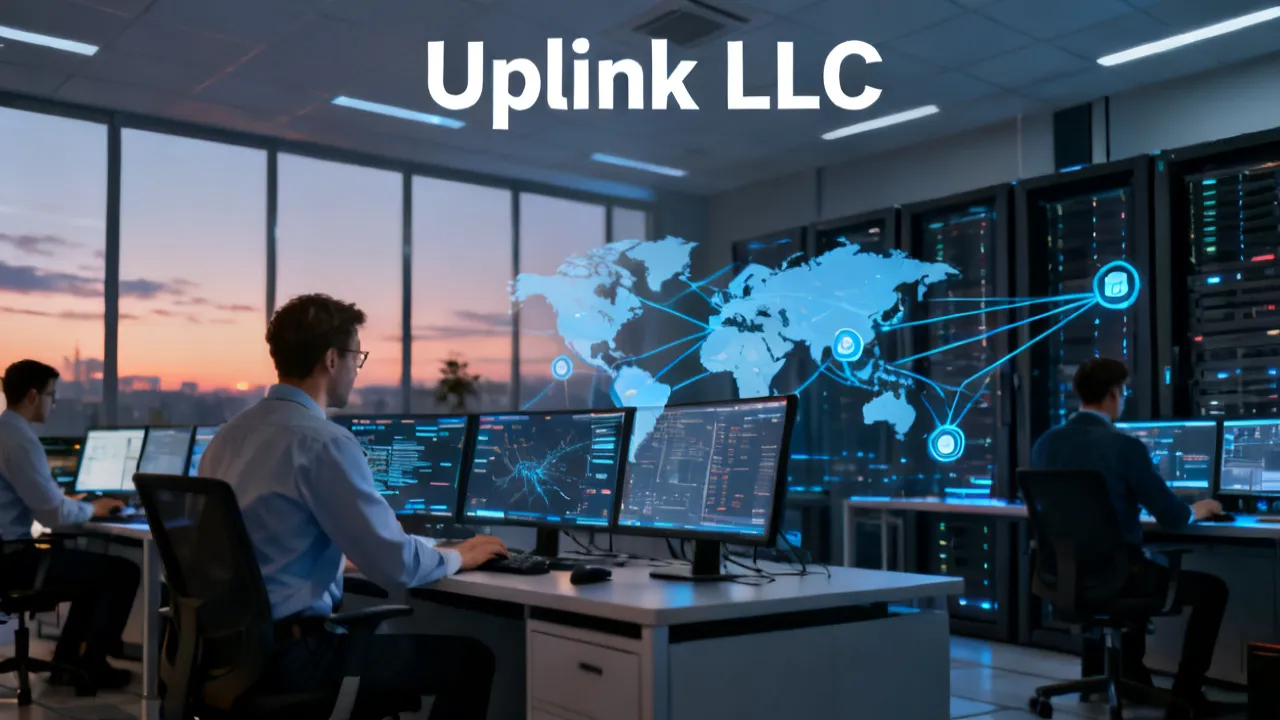
When organizations evaluate Uplink LLC, the central question is usually straightforward: how can they secure dependable network connectivity while maintaining operational control? In practical terms, an uplink-focused provider like Uplink LLC is often associated with designing and supporting connectivity paths that align with performance targets, uptime expectations, and real-world operational workflows. The goal of this guide is not to promote a single “top” option, but to clarify how connectivity decisions are commonly made—so you can assess whether an uplink arrangement supports your operational needs.
At the outset, it helps to separate three layers of responsibility:
Because connectivity is inherently technical and operational, the very important “selection criteria” are rarely only about raw speed. They typically include how well the provider manages failure scenarios, how transparent the reporting is, how changes are handled, and whether the operational model fits your internal teams.
In many organizations, uplinks become one of the first “visible” dependencies: users notice when cloud applications are slow, when video calls fail, when POS systems lose connectivity, or when VPN sessions become unstable. In other words, the uplink is the layer that determines whether everything above it behaves like a resilient service—or like a fragile chain. That is why evaluating a provider like Uplink LLC is less about checking a throughput checkbox and more about validating end-to-end behavior under normal operations and under stress.
Uplink services sit at the boundary between your organization and the wider network environment—where reliability, latency behavior, and resilience become tangible. For many businesses, the uplink is not a background utility; it is a core dependency for applications, communications, cloud access, and business continuity. As demand grows, the ability to scale connectivity without introducing avoidable risk becomes a meaningful differentiator.
From an industry standpoint, several widely documented trends drive this focus:
In this environment, vendors referenced as Uplink LLC are typically evaluated through a practical lens: can they provide connectivity that behaves predictably under normal conditions and can they support recovery and change management when conditions deviate?
“Predictably” is the key word. Predictable behavior is not just about meeting a stated availability target; it is also about how the service behaves during events—such as route flaps, fiber cuts, upstream congestion, maintenance activities, or misconfigurations. Two providers may both advertise similar high availability percentages; however, if one provider’s failover is slow and produces long jitter spikes, the application experience can still degrade materially. Similarly, two providers may be “fast” during testing, but experience persistent packet loss during peak hours if their upstream capacity is not engineered for your traffic patterns.
As more organizations adopt cloud-native design and real-time communication systems, connectivity requirements also broaden. Applications often care about latency consistency (jitter) as much as average latency. VoIP, video, trading systems, and certain interactive experiences are highly sensitive to variation and loss. That means uplink operations are effectively part of the application performance budget, and provider performance should be treated as a controllable engineering input rather than a background assumption.
Below are evaluation areas that industry professionals commonly treat as “must-haves” when choosing uplink services. While the terminology differs across vendors, the underlying operational logic is consistent.
Capacity planning is more than selecting a number. It includes understanding how traffic patterns behave across time: peak usage windows, burstiness, diurnal demand, and the effect of traffic growth. A credible provider discussion usually covers how capacity assumptions will be validated, how overutilization risks are managed, and how upgrade paths are handled.
When you speak with Uplink LLC (or any provider), ask how they approach:
But capacity planning also includes engineering choices you may not initially think about. For example, does the design account for packet buffer behavior under congestion? Congestion can manifest as packet loss or as increased latency (queueing delay). Even if throughput is adequate on paper, an uplink that becomes congested might still degrade interactive sessions due to bufferbloat or insufficient scheduling. This is why good providers discuss performance not only in terms of maximum bandwidth but also in terms of quality under load.
You should also consider whether your traffic is predictable or “event-driven.” Many organizations have baseline traffic—like email, API calls, and authenticated web sessions—but also experience sudden spikes (end-of-day batch jobs, campaign traffic surges, marketing promotions, software updates, large uploads to the cloud, or disaster recovery rehearsals). If your traffic is event-driven, capacity planning must include headroom for bursts, not just average utilization.
Finally, capacity planning is not only about the uplink itself; it is also about the path characteristics that influence your observed performance. Even if two providers offer the same nominal bandwidth, the routing strategy, upstream interconnect quality, and traffic engineering approach can make their observed latency and jitter differ significantly. Ask how the provider supports capacity upgrades—whether changes are proactive (recommended based on trending metrics) or reactive (only after SLA breaches). Proactive upgrade recommendations are often a sign of mature operational monitoring and planning discipline.
Very connectivity incidents are not “mysteries.” They tend to follow patterns: circuit faults, route instability, upstream constraints, or changes that affect path selection. A strong uplink strategy considers redundancy in a way that supports recovery.
From an expert perspective, you want clarity on redundancy concepts such as:
It is not enough to ask whether redundancy exists; you should ask how it behaves during different failure types. For example:
Redundancy also intersects with architecture choices in your own environment. If you rely on dual WAN, your router’s failover logic matters. If you use SD-WAN, your policy selection matters. A strong provider should collaborate on technical details—such as handoff behavior, addressing stability, and any constraints on how quickly failover should occur. Provider behavior should align with your intent for failover timing and application resilience.
In some cases, organizations confuse “redundant circuits” with “independent failure domains.” Two circuits may appear separate but still depend on the same underlying facility or upstream choke point. A credible provider or consulting process will discuss the risk of shared dependencies—like shared physical routes, shared aggregation points, or shared maintenance windows. Understanding failure domains helps you prevent the scenario where both uplinks degrade simultaneously due to a common upstream issue.
Ask for typical failover time expectations and what you can do to achieve them. Some providers may define recovery time under certain assumptions (for example, your internal routing must be configured to detect loss quickly). If you do not control the same assumptions, your real-world recovery may be slower. A good evaluation treats recovery as a system-wide process rather than a provider-only claim.
Connectivity services become manageable when you can observe them. Many organizations focus on contractual language, but day-to-day success is often tied to monitoring quality: what metrics are available, how alerts are configured, and whether incident reports are actionable.
When engaging with Uplink LLC, a practical line of inquiry is:
Monitoring should be treated as an operational capability, not merely a reporting artifact. Teams frequently want metrics that can be correlated with application incidents: changes in latency or packet loss should align with application response time metrics, authentication failures, or timeouts in logs. If the provider gives only binary “up/down” status, you may be unable to diagnose “it’s not down, but it’s bad” periods.
Consider how the provider reports:
Also ask about how they handle false positives and false negatives. A provider might generate excessive alerts during normal fluctuations, exhausting your on-call team. Alternatively, a provider might wait until a threshold is breached. In either case, the operational mismatch can cause real delays in response. Transparent monitoring design means you can fine-tune your detection thresholds and reduce wasted operational cycles.
Operational transparency includes how they document incidents. A strong RCA does more than state “a circuit fault occurred.” It typically includes what failed, when it began, what detection mechanisms observed first, what mitigation steps were taken, and what preventive measures are planned. If RCA is consistently vague or incomplete, it may hinder your internal governance and make it harder to justify architectural improvements.
Finally, monitoring and reporting tie directly into governance. If you are in a regulated environment or if you need evidence for internal audits, you need consistent documentation, timestamps, and traceable records. Ask how service tickets are stored, whether you get exported reports, and whether you can access them in a structured way.
Even routine changes can introduce risk—especially when multiple network elements must coordinate. Industry operations teams typically want defined processes for planned changes: windows, rollback approaches, and pre- and post-change verification.
For a provider associated with Uplink LLC, you should assess whether operational procedures include:
Change management is often where the difference between “acceptable” and “excellent” uplink support becomes visible. A technically sound network can still produce outages if changes are executed without proper sequencing, coordination, or validation. Therefore, you should ask for change windows policies—how far in advance they notify customers, what kinds of changes require customer approval, and how they handle emergencies.
Equally important is rollback readiness. If a change fails, can they revert quickly? Do they maintain version histories? Do they test changes in staging environments? If the provider’s approach is “we’ll see what happens,” that may be risky for critical workloads.
Verification steps should also be explicit. After a change, what checks are performed? Is there a baseline metric comparison (latency/jitter/packet loss/availability)? Do they validate path behavior from multiple observation points? The more robust the post-change checks, the less likely you are to experience lingering performance issues that only become apparent days later.
Operational procedures should also cover how they coordinate with your internal teams during migrations or upgrades. For instance:
When evaluating a provider like Uplink LLC, it’s wise to request examples of how they run changes. Even anonymized sample change documentation can reveal maturity. Some organizations ask for a typical change record showing planned steps, rollback steps, pre-checks, post-checks, and approval details.
Connectivity and security are intertwined. An uplink is part of the traffic path, which means your security posture depends on where and how traffic is inspected, logged, and defended. While a connectivity provider may not own your full security architecture, the way they structure network access can either enable or complicate governance.
Consider asking how Uplink LLC supports alignment with security expectations, such as:
Security alignment is not only about blocking attacks. It also includes how the provider ensures safe operational practices. For example, when incidents occur, you may need network logs, but you also need assurances about data handling, retention time, and access controls. If your security program includes correlation between network events and security alerts, you need consistent timestamps and clear event semantics.
Additionally, uplinks can influence segmentation and identity. If your organization uses private addressing, VPNs, or secure tunnels, the provider may affect tunnel stability through route choices and maintenance patterns. A strong provider minimizes disruptive events that break secure tunnels, or at least coordinates them with notification and controlled windows.
Consider the following security-adjacent questions:
Network governance also includes operational responsibilities. Who is responsible for what during a security incident that overlaps connectivity degradation? If your provider and internal teams have unclear escalation rules, incident response can slow down. Define the ownership boundaries early and validate them through tabletop exercises.
Finally, consider compliance requirements. If you need evidence of uptime, change records, or incident documentation, your provider’s governance process should support audit preparation. Even if the provider is not the “data controller” for your application data, they may still be a key source of operational evidence.
Professional procurement typically emphasizes clarity: what is included, how performance is measured, what remedies apply under specific conditions, and how disputes are resolved. Avoid selecting purely on marketing claims. Instead, focus on service definitions, reporting cadence, and the boundaries of provider responsibility.
In that spirit, when evaluating a provider like Uplink LLC, request and verify details that relate to:
Contractual clarity should also cover what happens during “gray zone” events—when service is not clearly down, but it is worse than expected. Many SLAs define availability in terms of connectivity status; however, users experience “service failure” when applications time out, voice calls drop, or transaction latency exceeds thresholds. Ask whether performance-based metrics exist in the contract, whether those metrics are measured end-to-end, and how they are interpreted.
When the contract includes service credits or remedies, understand the triggering conditions. Are credits based on calendar month totals, event counts, or threshold breaches? Are there exclusions (customer equipment faults, power outages, third-party events)? Exclusions can matter. A provider might exclude “customer premises equipment” issues, but you need to understand what counts as premises equipment and where responsibility boundaries lie.
Procurement teams should also validate maintenance windows and planned outage rules. Some providers schedule maintenance that can cause short disruptions, but good providers coordinate them and clearly define what notifications are provided. If your environment requires strict uptime, the provider must show how they maintain service with minimal disruption.
Finally, dispute resolution processes should be clear and reasonable. If you cannot easily escalate issues or if response windows are unrealistic, the SLA becomes less actionable. Look for mechanisms that support consistent resolution: ticketing processes, escalation levels, response times, and evidence submission expectations.
Even without a specific city or country mentioned here, localization still matters operationally. In many regions, on-the-ground realities—like staffing hours, escalation practices, and typical maintenance scheduling—can influence perceived performance and responsiveness. In other words, two providers might quote similar service attributes, yet deliver different operational experiences due to differences in how quickly incidents are staffed and resolved.
If your organization operates around local norms such as weekday business hours and region-specific escalation expectations, it is worth aligning your incident response calendar with the provider’s operational model. This is where “nearby” considerations can indirectly matter: the closer the operational support alignment, the easier it often is to coordinate troubleshooting, change windows, and business continuity requirements.
Localization also influences how quickly field work is possible during physical faults. While many uplink events are handled remotely (routing changes, monitoring remediation), physical access events may require dispatch. Ask what the provider’s service model is for dispatch in the event of fiber cuts or last-mile faults, and what their typical response times are for those scenarios.
Another localization factor is language and documentation style. Incidents don’t pause for paperwork. If provider incident reports are unclear or if communication during emergencies is inconsistent, operational friction increases. While this may sound minor, in high-pressure events the clarity of communication often makes the difference between a quick fix and extended downtime.
Localization also affects internal coordination. If your security team has specific escalation schedules, compliance reporting calendars, or incident review meeting cadence, a provider that can produce reports aligned with those schedules helps reduce administrative delay. Operational fit is not just technical; it’s also procedural and cultural.
Below is a structured process that helps teams select and validate uplink services using evidence and operational reasoning. It’s written to be vendor-neutral, but it is directly applicable when assessing Uplink LLC or any comparable connectivity provider.
To make this framework actionable, teams often add “evidence gathering” steps. For example, you can request:
Evidence-based evaluation reduces subjective judgments. When people rely on a provider’s explanation alone, comparisons become difficult. When you can see actual artifacts, you can compare operational maturity more objectively.
Another practical addition is to define internal test scripts for post-cutover validation. “We connected and it seems fine” is not enough for critical services. You should define which applications will be tested, how you will measure success, what KPIs must be within baseline thresholds, and how you will record results for acceptance. This reduces the chance of disputes later, especially if performance issues appear after the cutover window.
The table below contrasts common uplink arrangements and the practical conditions teams often require during selection. This is not a vendor price sheet and does not include external links. It is intended to help you frame your questions for Uplink LLC during vendor evaluation.
| Evaluation Area | What You Typically Need | Conditions/Requirements to Verify |
|---|---|---|
| Service scope | Clear definition of what is included in the uplink service | Included demarcation responsibilities, support boundaries, and escalation ownership |
| Performance measurement | Transparent KPI definitions | How availability, latency, jitter, and packet loss are measured; reporting cadence |
| Uptime expectations | Realistic uptime targets tied to measurement methodology | Maintenance window rules; how outages are categorized |
| Redundancy model | Defined failover and recovery behavior | Reroute logic expectations; expected recovery time ranges; monitoring coverage |
| Change management | Repeatable process for modifications | Planned change windows; rollback/mitigation plans; post-change verification steps |
| Incident response | Operational clarity during service degradation | Severity tiers; escalation pathways; collaboration expectations with your teams |
| Security alignment | Network governance that supports your security program | Logging expectations; segmentation approach; constraints on traffic handling |
| Documentation and auditability | Records that support internal governance | RCA quality; change logs; evidence suitable for audits or compliance reviews |
As you use this table, treat each “conditions to verify” item as an opportunity to request documentation or demonstrations. For example, if “performance measurement” is critical, request the exact metric definitions and how they are measured. If “incident response” is critical, ask for the severity tier definitions and response targets. If “documentation and auditability” matters, ask what your team receives after events—daily summaries, ticket exports, or formal post-incident reports.
In practice, organizations discover late in procurement that they care about one dimension more than they initially thought. For instance, a team may focus on throughput and then realize that jitter behavior is the true driver for call quality or transaction latency. Another team may care about uptime but find that maintenance windows coincide with business-critical peak times. The comparison table helps reveal these mismatches early.
The request mentions “price information,” but no specific pricing figures or published rates were provided in the prompt. In professional practice, that means the responsible approach is to discuss pricing dynamics rather than invent numbers. Connectivity costs are influenced by capacity, redundancy level, installation complexity, operational scope, and contract structure.
In evaluating Uplink LLC commercially, consider whether pricing reflects:
If Uplink LLC offers multiple service tiers, compare tiers using the measurable framework above rather than focusing on a single number. A “lower cost” arrangement that lacks operational transparency or resilience can create downstream costs through prolonged incidents, delayed remediation, or constrained upgrade paths.
It can be helpful to treat uplink pricing as an investment in risk reduction. While it is tempting to minimize monthly costs, downtime and degraded performance carry operational costs—lost transactions, user frustration, increased support burden, and potential compliance reporting impacts. Some organizations quantify this by estimating the cost of downtime per hour and comparing it to the additional cost of redundancy. Even a rough estimate can prevent “cost overfitting,” where the team optimizes only for the lowest bill and not for the total cost of ownership (TCO).
Total cost of ownership often includes internal labor. If a provider does not supply clear monitoring, internal teams may need to create additional probes and analytics. If a provider’s RCA reports are incomplete, internal teams may spend more time doing manual investigation. If change notifications are inconsistent, internal operations may become reactive. These are often hidden costs.
When commercial terms are reviewed, also pay attention to:
The right uplink contract balances commercial flexibility with operational maturity. If cost is low but contract constraints are heavy (for example, inflexible upgrades or unclear remedies), the organization may face pressure later when needs evolve.
Many connectivity programs fail not because the technology is wrong, but because the operational transition is under-specified. Teams often underestimate cutover planning, post-install validation, and the coordination required between network operations, security teams, and application owners.
Professional requirements for a robust go-live plan typically include:
A go-live plan is where operational reality meets procurement intent. Many teams sign a contract and then discover that they do not have the right ownership model or that their internal teams are not trained on provider-specific tools and ticket flows. The result is delayed response when something goes wrong.
To avoid that, teams should define acceptance criteria for:
It is also useful to define the “first incident readiness” plan. For example, if a service degradation occurs within the first two weeks after cutover, who handles it? Do you contact the provider directly or route through your internal service desk? Who participates in the technical call? What information will your team provide (timestamps, interface counters, application logs)? The goal is to reduce time-to-triage.
Knowledge transfer should include:
When evaluating Uplink LLC, ask for support during the initial stabilization period. Many providers offer an onboarding period where they work closely with the customer to validate monitoring and reduce risk. If not offered, you may still be able to negotiate extra support time in early phases, especially for complex migrations or multi-site deployments.
Reliability in network services is typically assessed through measurable signals: availability over time, performance under load, and the quality of recovery processes. While vendors may present reliability in different terms, well-structured contracts define measurement methods and reporting. For the broader industry context, see established frameworks and guidance from recognized bodies like the ITU-T (telecommunications performance and availability concepts) and vendor-neutral reliability methodologies used in operations engineering.
For reference-level background on how availability and performance are discussed in communications systems, organizations often consult:
These references do not replace vendor-specific contract terms, but they support objective comparisons of how reliability is defined and managed.
In a practical procurement setting, reliability should be translated into outcomes your organization can validate. Reliability is not only “the circuit stays up.” It is “the service behaves in a way that enables business continuity.” That includes:
Reliability also includes “change reliability.” A provider can have an excellent uptime record but still create periodic instability if changes are executed without enough verification. Therefore, evaluating change management and incident response is part of assessing reliability. Reliability is holistic, and networks are living systems that evolve through maintenance, upgrades, and routing adjustments.
Another nuance is measurement location. If the contract defines availability at one point in the network but your application experiences failures due to issues upstream of that measurement point, you may perceive reliability gaps. That is why you should ask where metrics are measured (provider side only, customer edge, or intermediate points) and how those measurements map to your observed experience.
Uplink LLC is described here as a connectivity-oriented provider whose role typically includes supporting network link operations, service design alignment, and ongoing operational support. In general, uplink providers deliver the transport connectivity foundation and coordinate monitoring, escalation, and change-related procedures needed to keep that foundation dependable.
In more operational terms, uplink providers typically help customers by:
Start with measurable service definitions: how availability is calculated, what performance metrics are tracked (latency, jitter, packet loss), and what escalation workflows exist during degradation. Then validate redundancy behavior and change management procedures. The very reliable choice is the one with verifiable operational details, not just a high-level promise.
To make evaluation more rigorous, require examples and perform controlled validation. For example, you can run a trial measurement period where your team monitors baseline metrics while the provider confirms monitoring coverage. If the provider can demonstrate measurement alignment (their metrics correlate with your observations), you gain confidence in how incidents will be understood and resolved.
Bandwidth is important, but it is rarely sufficient alone. Expert evaluations weigh redundancy, monitoring quality, incident response readiness, change control processes, and how capacity planning accounts for burstiness and growth. A well-managed uplink can outperform a higher-capacity link if it has stronger operational controls and clearer failure behavior.
Bandwidth should be evaluated alongside:
Ask about monitoring and reporting cadence, how incidents are escalated, what failover behavior looks like, and how planned changes are scheduled and verified. Also request details on documentation quality—especially root-cause reporting and corrective action tracking. For Uplink LLC, ensure these topics are addressed in a structured, evidence-based way.
Additional high-yield questions include:
Use a consistent evaluation rubric: service scope, measurement methodology, redundancy model, operational procedures, support coverage, and documentation/reporting quality. Compare tiers against your application criticality and your internal operational maturity. Avoid relying on one attribute like cost or headline throughput.
If the tiers differ in operational scope (for example, different levels of reporting frequency, different alerting options, or different escalation coverage), quantify operational impact. Sometimes an extra tier that provides better incident visibility reduces downtime even if the raw bandwidth is the same.
Common risks include under-specified cutover plans, unclear rollback steps, weak monitoring coverage during migration, and incomplete alignment between network and security workflows. Another risk is assuming that performance will remain stable without verifying jitter/packet loss behaviors under real load conditions.
Other less obvious risks include:
Often, yes—but it depends on the operational scope you contract for. Performance relates to how the service is engineered and monitored, while governance relates to auditability, change documentation, and incident handling procedures. Confirm both through service definitions and operational workflows, not assumptions.
Governance support should include evidence-based processes: documented incident timelines, consistent ticketing, change records, and accessible reporting. Performance support includes not only measurements but also a responsive operational process when metrics deviate from baseline.
Onboarding time varies based on installation complexity, required coordination, and migration needs. Instead of relying on generic timelines, ask Uplink LLC about their onboarding process steps, prerequisites, and how they coordinate dependencies. In professional deployments, clarity on prerequisites often matters more than the exact calendar duration.
During onboarding planning, teams should also define:
Choosing Uplink LLC—or any uplink provider—should be treated as an operational decision, not merely a technical purchase. The very durable outcomes come from aligning service design with measurable reliability expectations, validating redundancy and failure behaviors, and confirming that monitoring, escalation, change management, and governance processes are mature enough to support your day-to-day operations.
If you approach the evaluation with structured requirements, evidence-based questions, and clear acceptance criteria for cutover and post-install performance, you reduce uncertainty and increase the likelihood that your uplink behaves predictably when business matters very.
Ultimately, the best uplink is the one that integrates smoothly into your operational ecosystem. It enables your security posture, supports your change workflows, provides enough visibility for incident response, and offers realistic recovery behavior under failure scenarios. When these elements are validated before go-live—rather than discovered during incidents—uplink deployments become a stable foundation for the rest of your technology stack.
Striking the Perfect Balance: Navigating Premiums and Out-of-Pocket Expenses in Senior Insurance Plans

Explore the Tranquil Bliss of Idyllic Rural Retreats

How to Make Lasting Memories at Disneyland Attractions

Affordable Phones and Plans for Seniors

Affordable Full Mouth Dental Implants Near You

Unlock the Top Kept Secrets to Finding Your Ideal Dentist for Flawless Dental Implant Results!

Discovering Springdale Estates

Unveiling RS Sul Telecom Services

The Guide to Car Trading

Unveiling RS Sul Telecom Services
RS Sul Telecom emerges as a prominent entity in the telecommunications industry, providing reliable services across various regions. This article delves into the offerings of RS Sul Telecom, the benefits it presents to both individual and business clients, and its impact on the modern telecom landscape.

Understanding Rlock Advpl in Business
Rlock Advpl represents a pivotal advancement in business software solutions, offering enhanced security and efficiency for enterprise resource planning systems. This article delves into the intricacies of Rlock Advpl, its application in modern businesses, and the benefits it offers in streamlining operations and safeguarding data. As an expert tool, Rlock Advpl is essential for businesses looking to optimize their IT infrastructure.

Unveiling Atranet Innovation
Atranet represents a cutting-edge concept in networking technology. Harnessing its capabilities can transform digital communication by providing seamless connectivity. Designed to optimize data transfer, security, and efficiency, Atranet is shaping the future of how we connect and share information. This article delves into its structure, applications, and potential impacts on industry practices and consumer experiences.

Understanding Polysulfide Adhesive Applications
This comprehensive guide explores the applications and benefits of polysulfide adhesive, highlighting its unique properties and widespread use in construction, aerospace, and automotive industries. Known for its flexibility and resistance to various environmental factors, polysulfide adhesive is a key component in sealing and bonding applications, providing durability and reliability in demanding conditions.
Comparing Vtex with Salesforce Commerce
This article provides an in-depth comparison between Vtex and Salesforce Commerce, two leading digital commerce platforms. Each offers unique features suited to different business needs. Vtex is renowned for its collaborative commerce approach, while Salesforce Commerce shines with its comprehensive customer relationship management capabilities. Explore their differences, strengths, and insights from industry experts.

Understanding the Latest Chrome Version
This article delves into the intricacies and features of the latest Chrome version. Chrome, developed by Google, is one of the very popular web browsers globally, known for its speed, simplicity, and security features. Each update aims to enhance user experience through improved functionality and performance. Understanding these updates is crucial for both everyday users and developers.