This guide explains how to interpret procurement-related code O5765317316 and organize supplier documentation for consistent ordering. Objectively, the keywords point to an identifier used in purchasing workflows, where accuracy affects traceability, inventory control, and audit readiness. Background context covers why supplier records and SKU-style codes matter across modern procurement.
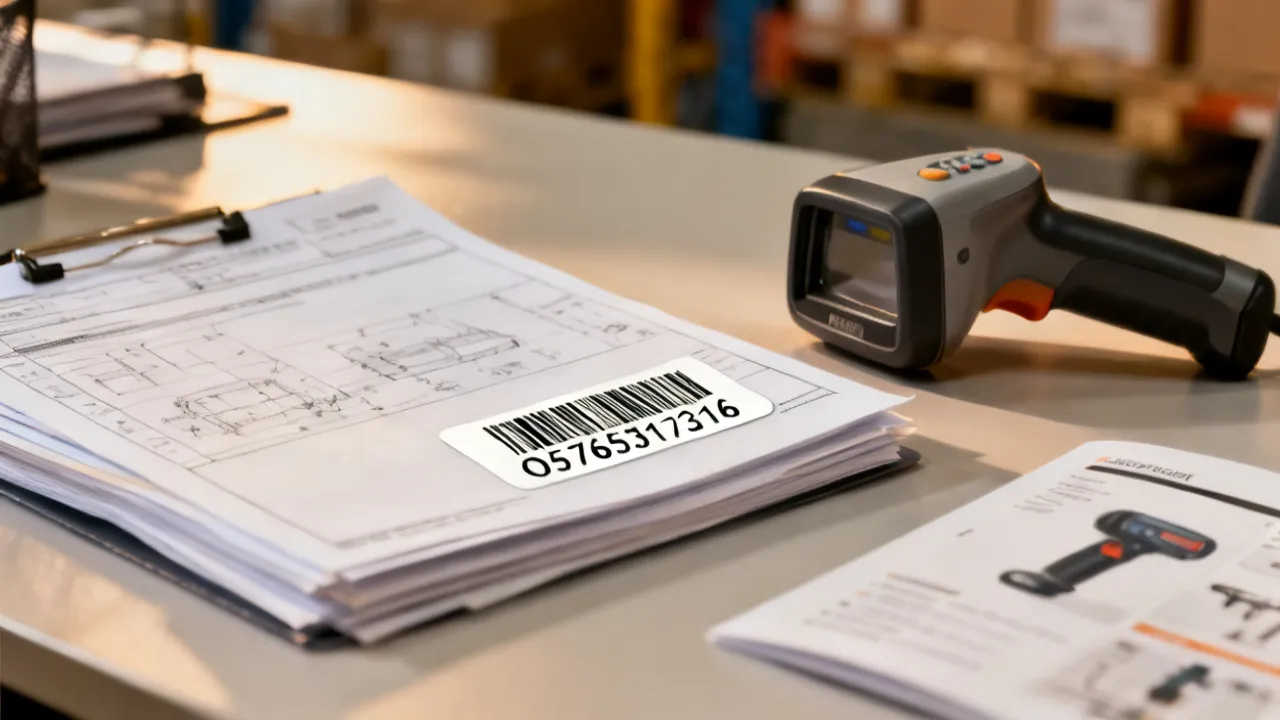
For buyers, operations teams, and compliance staff, the very practical takeaway is simple: code O5765317316 should be treated as a system-critical identifier within procurement and inventory workflows. When the code is captured, transmitted, and stored consistently, it improves traceability, reduces ordering mistakes, and supports audit-ready documentation—especially when supplier catalogs and internal part numbers must align. In many organizations, this kind of alphanumeric code sits at the intersection of purchasing, warehouse receiving, and quality assurance, so the “right” handling is less about guesswork and more about repeatable process.
Because the provided keywords also include O5765317316, the very objective way to interpret the request is that you want a structured explanation of how an identifier like this is typically used, how teams should validate it, and what conditions or requirements should be met before it is used as the basis of ordering, receiving, or recordkeeping. In practice, this is how most modern procurement organizations protect themselves against the quiet but expensive failures that happen when part references drift across systems: the purchase order line doesn’t match what arrives, the invoice doesn’t reconcile to the PO, and quality can’t prove what was actually supplied.
Even if O5765317316 appears “small” compared to the rest of procurement data—vendor name, quantities, cost centers, ship dates—its role is disproportionately large. Identifiers are the glue that binds together an auditable chain of custody. A missing or misinterpreted code often creates downstream work: manual corrections, re-labeling, hold releases, invoice disputes, and sometimes scrapped inventory. So, the core idea is to treat O5765317316 as a controlled key that must be handled like data, not like text.
Organizations that handle procurement identifiers well typically do the following: (1) they decide which system is the source of truth, (2) they confirm that the identifier corresponds to the correct specification and revision, (3) they enforce validation at the operational points where errors occur most (ordering and receiving), and (4) they retain evidence so that compliance teams can reconstruct decisions and mappings later. This is the difference between “we think it’s right” and “we can prove it’s right.”
Procurement systems rarely operate in isolation. In a typical environment, procurement documentation moves through multiple “states”: vendor onboarding, quotation, purchase order issuance, goods receipt, inspection/quality checks, and finally invoicing and reconciliation. A code such as O5765317316 becomes meaningful when it is consistently referenced across these stages.
From an industry perspective, the primary purpose of such identifiers is to reduce ambiguity. Whether the code maps to a SKU, a vendor part number, an internal stock-keeping unit, a configurable product variant, a batch/lot-traceable component, or a catalog reference, the system needs a stable key. When that stability is maintained, downstream tasks become easier: cycle counting, batch/lot tracing, root-cause analysis, and compliance documentation.
Even when procurement teams think they are “just ordering,” they are effectively building a record chain. If any link is inconsistent—wrong code, mismatched supplier listing, outdated catalog, or the wrong revision—receiving can fail to match items to purchase orders. Quality teams may also be blocked from verifying that the supplied items meet required specifications. Later, when auditors or customers ask what was purchased and why, teams with clean identifier handling can quickly produce the justification and evidence; teams with sloppy handling often spend days re-creating what happened from fragmented documents.
To see this more concretely, imagine that O5765317316 is the supplier’s catalog identifier for a certain electronic component configuration. During ordering, a buyer uses it in a PO line. At receiving, the warehouse scans a barcode label on the carton. If that barcode label was generated by a different internal mapping (or if the supplier changed packaging labels after a catalog update), receiving might record the item under a different internal part number. The immediate visible problem might be a receiving exception in the system. The bigger problem becomes what happens next: invoice matching fails, QA paperwork can’t reconcile, and the item may be quarantined pending resolution.
Because procurement codes touch multiple systems—ERP, warehouse management, quality management, procurement catalogs, and finance—each system needs the same underlying reference, even if the display label differs. In other words, the code is often the “canonical identity” even when different teams show it in different ways. Strong governance ensures the canonical identity remains canonical across the workflow.
The very important operational risk is not that the code is “wrong,” but that it is treated as optional. Expert procurement practice treats identifier capture as mandatory, with validation steps. Consider these points:
Beyond these items, buyers should consider how exceptions are handled. In real procurement operations, exceptions happen: suppliers substitute items due to stock constraints, a part is phased out, or a revision changes without obvious visual differences. A mature process treats O5765317316 as part of an exception framework: any substitution should involve a controlled update to the mapping or a documented supersession decision. Otherwise, exceptions accumulate and degrade the quality of your master data.
Another buyer consideration is the difference between “catalog code” and “packaging label code.” Suppliers often include multiple identifiers: a product catalog number, a packaging label or carton code, a manufacturing order identifier, and sometimes a batch/lot identifier. If your receiving process captures the wrong type of code, it can create artificial mismatches. Therefore, buyers should ensure that the code used in purchase orders is the same type of code that receiving can reliably capture and map.
Because procurement codes depend on supplier context, it’s common that O5765317316 is referenced alongside documents such as commercial invoices, packing lists, product certificates, and technical datasheets. The goal is to align three layers:
From an industry expert viewpoint, inconsistencies often appear when one layer uses a different naming or coding convention. For instance, the supplier might provide a code like O5765317316 on the catalog, while receiving uses a barcode label that maps to a different internal item number. When teams do not maintain a reliable crosswalk, manual work increases—and so does the probability of errors.
To prevent this, mature organizations define an “identifier reconciliation standard.” That standard answers questions such as: Which code should be present on the invoice? Which should be present on the packing list? Which should be scanned at receiving? And what happens when they differ? A common failure mode is when the buyer checks the code in the purchase order, but receiving checks a different identifier from the carton label. Without a formal reconciliation rule, the mismatch becomes inevitable.
Another nuance is that supplier documentation may contain multiple codes for the same item. A supplier may include the catalog number, but also include an internal manufacturing part number (MPN) or a revision code embedded in a technical PDF. If your procurement team does not know which code corresponds to O5765317316, they might inadvertently approve a different configuration. Therefore, the organization should document not only the code, but what the code means: the specification, revision, packaging type, compliance certifications, and any required test results.
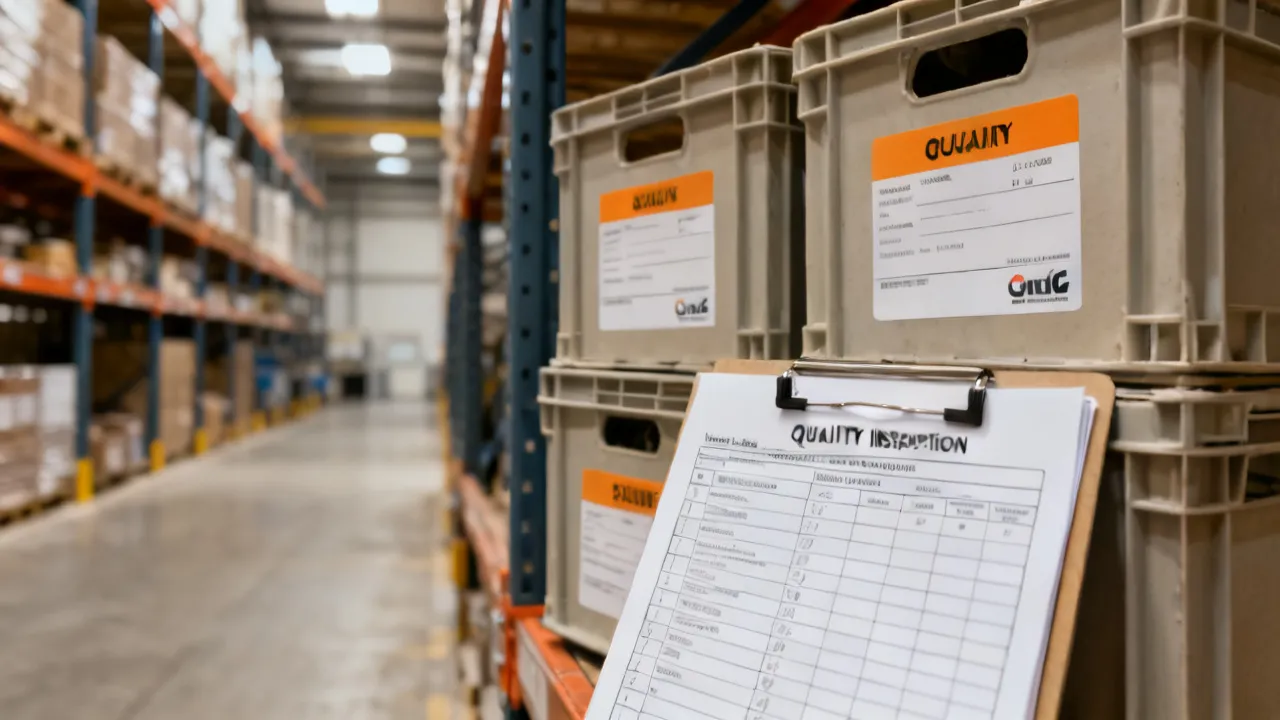
In regulated environments—such as aerospace, medical devices, defense, or certain industrial safety applications—the technical/compliance layer becomes especially important. QA may require proof that specific materials, revision levels, and certificates were provided. If O5765317316 is not consistently referenced in the QA evidence, audit reviewers may challenge the traceability chain. In extreme cases, the organization may need to segregate inventory until it can verify conformity, which delays production and increases cost.
Before O5765317316 is used as the basis for a purchase order or inventory receiving entry, organizations should meet concrete conditions. These conditions also function as practical governance rules, helping teams avoid “tribal knowledge” decisions that can break during audits or staff turnover.
Below is a supplement structured to function as a comparison table, a source note, and a step-by-step guide—without listing links inside the table.
| Area | Compare “Good Practice” vs “Common Failure” |
|---|---|
| Code capture | Good: O5765317316 is captured from the approved supplier record or ERP item master. Failure: Code is inferred from text or older documents without confirmation. |
| Mapping | Good: Supplier code maps to the correct internal item/part number with controlled master data. Failure: Mapping is incomplete, causing mismatched PO lines at receiving. |
| Version control | Good: Teams verify whether the identifier references the current revision/spec. Failure: Teams reorder using a previously valid code despite catalog supersession. |
| Receiving validation | Good: Scan/verify at goods receipt and reconcile with packing list and PO. Failure: Receiving is recorded under the wrong code, delaying invoicing and QA. |
| Audit evidence | Good: Retain validation evidence showing how O5765317316 was verified. Failure: Validation is undocumented, weakening compliance review. |
To make these requirements actionable, organizations typically implement them across three layers: people, process, and systems.
People layer: buyers, receiving clerks, and QA reviewers must know what O5765317316 represents and what they are accountable for. For example, receiving might be responsible for capturing the code and associating it to the PO line; QA might be responsible for verifying specification documents tied to that code.
Process layer: there must be an SOP describing validation checks, escalation paths, and what constitutes “resolved mismatch.” If a supplier ships a different code, the process should define whether the organization can accept it with a substitution approval or must reject/quarantine the shipment.
Systems layer: ERP validation rules, warehouse barcode validation, and crosswalk tables help prevent human error. For instance, if a PO line requires O5765317316 but the receiving scan yields a different supplier code, the system should flag the exception instead of silently accepting it.
These layers reinforce each other. If any one layer is weak—say, systems accept everything—errors can propagate even if people intend to do the right thing.
This article is written from a procurement and operations governance perspective. For authoritative background on the role of standardized identifiers and quality management principles, readers may consult widely used frameworks such as ISO quality-management concepts (notably ISO 9001) and general procurement governance guidance used in industry compliance programs. For traceability and quality-system thinking, consult official ISO documentation and other recognized standards bodies where applicable.
Identifier-driven procurement is closely linked to broader quality system principles: document control, traceability, corrective actions, and risk-based thinking. While O5765317316 may be a single code, the discipline around it reflects a larger philosophy: organizations should be able to explain how decisions were made, how data was validated, and how conformance was verified.
Another lens often used by procurement leaders is internal control. Internal controls are policies and procedures designed to ensure that transactions are properly authorized, recorded, and supported with evidence. In this context, using O5765317316 properly becomes part of internal control because it ensures that goods receipts and invoice matching reflect authorized purchase order commitments.
Therefore, treat this article as a practical “governance map” for how a stable identifier should be handled. The specific code format (the exact characters in O5765317316) matters less than the behavior around it: consistent capture, validated mapping, version control, and auditable reconciliation.
To expand this into a more robust operational approach, consider adding two “guardrail steps” that many mature organizations include:
Guardrail step A: Pre-approval check for catalog or revision changes. Before issuing a PO, verify whether the supplier has announced changes or whether the part revision associated with O5765317316 is still current in your ERP. This is particularly important if you procure on a long lead time or from suppliers who frequently update catalogs.
Guardrail step B: Exception workflow definition. If receiving does not match O5765317316, receiving should not attempt to “fix” the transaction by overriding data without an approval workflow. Instead, trigger an exception: (1) quarantine stock, (2) notify procurement and QA, (3) compare documentation, (4) decide whether to accept substitution or reject, and (5) update master data only through controlled change management.
These guardrails prevent the classic scenario where the warehouse resolves exceptions by editing records so that the system shows “received,” but the audit trail becomes unclear and the quality team’s ability to verify specifications is compromised.
Additionally, many teams implement training and competency checks. Receiving staff should understand not only how to scan O5765317316, but how to recognize when the scanned code does not correspond to the PO line. Buyers should understand how mapping tables work and how to avoid selecting an unapproved item reference when searching in an ERP catalog.
The prompt requests integration of “price information,” but no explicit price figure, currency, or pricing model was provided in the keywords. In practice, when a procurement code such as O5765317316 is tied to a supplier quotation, price information typically appears in one or more of the following forms:
From an expert governance stance, the critical point is that price should be associated with the same validated code reference. If O5765317316 is correct but the quote line uses a different supplier code, disputes can occur during invoice reconciliation or contract review.
Consider how this can happen in real life. A supplier may provide a quotation where line item A references a supplier code that differs from O5765317316 by a revision digit or suffix. The buyer, focusing on description text, might assume the code difference is inconsequential and proceed. Later, when the invoice arrives, finance tries to match the invoice line to the PO line using the supplier code and unit price. If the invoice references the other code, automated matching fails. Even if humans can resolve it, the delay can lead to late payment cycles, strained supplier relationships, and potentially lost discount eligibility.
Therefore, organizations should implement a pricing validation practice that treats O5765317316 as part of the pricing key. This typically includes checking:
In more sophisticated setups, the organization may store a “pricing snapshot” linked to O5765317316 at time of PO creation. That snapshot helps ensure that even if the supplier changes pricing later, the PO remains anchored to the agreed terms. This is especially useful for multi-year contracts or price renegotiation cycles.
Another nuance is currency and tax treatment. While the prompt did not provide a currency, in practice the procurement code may be used to link price to tax classification, duty codes, or VAT/GST applicability. If O5765317316 is mis-mapped, tax treatment can become inconsistent, creating compliance risks as well as accounting issues. So price information validation is not only a financial matter—it can be a compliance matter.
Procurement codes are only stable if supplier records are stable. Supplier details—such as the vendor legal entity, catalog revision, and ordering address—affect how a code like O5765317316 should be interpreted.
For example, a supplier might have multiple catalogs for different product lines or business units. If O5765317316 appears in one catalog context but is ordered through a different sales channel, teams can encounter mismatches. Therefore, organizations typically maintain supplier master data hygiene: verifying approved vendor accounts, approved catalog sources, and standardized ordering contact points.
Where localization is relevant, it often shows up in operational rhythm rather than in the code itself. In many markets, buyers coordinate with warehouses that follow local receiving workflows—sometimes emphasizing paperwork signatures or specific document formats. The code’s handling should still be consistent, but the way evidence is captured may reflect local operational norms.
Supplier consistency also affects how the identifier appears in documents. Some suppliers may embed O5765317316 in PDF documents (like a certificate of analysis), while others may include it only in the packing list. Some may provide barcodes that are scannable and consistent; others may provide human-readable codes that increase the risk of transcription errors. A procurement governance program therefore shouldn’t only define “how to validate,” but also “how to capture evidence reliably given the supplier’s document formats.”
Another consideration is whether the supplier shares the same identifier across regions. A supplier may use slightly different naming conventions for regional distribution centers. If your organization has multiple warehouses receiving from different regional suppliers or channels, you must ensure that the mapping for O5765317316 is not assumed to be universal without verification.
To protect against this, many organizations implement vendor performance reviews and document audits. If receiving frequently fails to match O5765317316, the issue might be with the supplier’s label generation. In that case, a remediation plan could include:
This shifts the burden of consistency to the supplier for the parts of the process they control—reducing errors while improving end-to-end traceability.
Misuse of procurement identifiers usually produces predictable failure modes. Understanding these failure modes helps teams prevent problems rather than merely react to them:
While these points already describe common problems, it’s useful to understand why they happen in terms of system design and human behavior.
1) Identifier mismatch often reveals a “mapping gap.” Many organizations rely on crosswalk tables between supplier codes and internal item numbers. When these tables are incomplete, receiving might accept scanned items into a generic placeholder or wrong bucket, which then causes finance and QA mismatches. Even if only a small portion of orders are affected, the cumulative cost over time can be significant.
2) Identifier misuse can break audit trails. Auditors typically look for consistency between purchase orders, receiving records, and quality documentation. If O5765317316 was not consistently recorded at each step, you might not be able to reconstruct the chain of evidence. The immediate operational issues—like invoice delays—are often symptoms; the underlying governance failure is traceability.
3) Identifier misuse can trigger incorrect substitution approvals. For certain categories of parts, substitutions may be permissible only under strict rules. If O5765317316 is not validated, teams may inadvertently accept substitutions that do not meet required specifications. That can cause downstream quality issues, customer dissatisfaction, warranty claims, and regulatory scrutiny.
4) Identifier misuse can hide defects until late. In quality-sensitive environments, the identifier might be tied to a certification requirement. If the wrong identifier is recorded, you might assume the item is certified when it is not, or you might fail to recognize that a lot is nonconforming. These issues typically surface during inspections, customer audits, or failure analysis—often long after the point of failure.
Because these failures are systemic, prevention is typically achieved through combined measures: controlled master data, validation at key handoff points, and documented exception handling. When teams do this well, they reduce both the frequency of errors and the severity of consequences when errors occur.
Once the code O5765317316 is validated and mapped properly, teams often unlock efficiency improvements:
However, efficiency should not come at the cost of governance. The best-performing procurement organizations treat efficiency as a byproduct of control, not a replacement for control. In practice, they do this by standardizing identifier handling while still allowing controlled exceptions.
Here are concrete efficiency strategies that often accompany strong handling of identifiers like O5765317316:
Another efficiency gain comes from reducing “context switching.” If teams can rely on the identifier to load the correct specifications, test requirements, and documentation expectations, they spend less time searching through emails, PDFs, or older spreadsheets. This reduces cognitive load and shortens the time to resolve exceptions when something does go wrong.
Importantly, efficiency improvements should be designed so that exceptions remain manageable. The goal is not to eliminate all exceptions, but to ensure exceptions are detected early and resolved through a governed workflow that preserves evidence and prevents silent data corruption.
O5765317316 appears to be an alphanumeric procurement or product identifier used within purchasing and inventory documentation. In practice, it functions as a stable reference that links purchase orders, receiving records, and supplier documentation to the same underlying item or configuration—assuming your system mapping is correctly maintained.
You may find it on supplier catalogs, quotation line items, purchase order line references, packing lists, or shipment documents. It can also appear in internal ERP item master records if your organization has mapped the supplier code to an internal part number.
If the supplier provides a different identifier, your team should not simply proceed without verification. First confirm whether it is a revised supersession, a business-unit variant, or a mapping error. Then update the crosswalk only through the controlled process defined by your procurement and master data governance.
Price should be tied to the same validated item reference. Confirm that the quoted unit price, quantity breaks, and landed-cost terms align with the item specification associated with O5765317316. Reconcile the quote and PO line references before approval.
At minimum: validate the code’s origin, confirm the associated specification and revision, confirm supplier-to-internal mapping, and ensure your PO line references the approved identifier. For controlled environments, also ensure that audit evidence is retained.
Scanning is strongly preferred because it reduces transcription errors. If scanning is not feasible, your receiving team should use a documented manual verification checklist that compares the received item documentation to the PO references tied to O5765317316.
If your organization treats identifier codes as part of controlled procurement, the governance checklist typically includes:
To strengthen this checklist further, many organizations expand it into a “control matrix” that defines who does what, when, and what evidence is required. For example:
This control matrix helps avoid a common organizational failure: everyone assumes “someone else” validated O5765317316. When roles and evidence requirements are explicit, the audit trail becomes complete by design rather than by effort.
In summary, the very objective and actionable approach is to treat O5765317316 as a traceability key within your procurement workflow. When validated against reliable supplier documentation and mapped correctly to your internal item master, it supports consistent ordering, accurate receiving, smoother invoicing, and stronger audit readiness. The discipline is not only technical—it’s operational governance: capture, validate, map, reconcile, and retain evidence.
When teams handle identifiers like O5765317316 with this level of care, they reduce the likelihood of mismatches and the cost of correcting them. More importantly, they preserve the integrity of the supply chain record—so that when something goes wrong, the organization can investigate based on evidence rather than memory. That is the core reason procurement accuracy depends on identifier discipline: identifiers are the scaffolding that makes every subsequent process step reliable.
Striking the Perfect Balance: Navigating Premiums and Out-of-Pocket Expenses in Senior Insurance Plans

Explore the Tranquil Bliss of Idyllic Rural Retreats

How to Make Lasting Memories at Disneyland Attractions

4rkojvsx Technology: Industry Insights and Buying Guide

Affordable Phones and Plans for Seniors

Affordable Full Mouth Dental Implants Near You

Unlock the Top Kept Secrets to Finding Your Ideal Dentist for Flawless Dental Implant Results!

Discovering Springdale Estates

Unveiling RS Sul Telecom Services


Understanding 60817674500: Pricing, Supplier Signals, Quality Steps
This guide explains how to interpret the numeric keyword 60817674500 in procurement contexts, how pricing is commonly structured, and what supplier information should be verified before ordering. Objectively, it discusses what such identifiers often represent, why supplier traceability matters, and which due-diligence steps reduce delivery and compliance risk.
822478979788877878878897979797 Buyer’s Guide
This guide explains how to evaluate 822478979788877878878878897979797 procurement decisions with an objective lens. It outlines what the code typically signals in supply-chain workflows, how to verify supplier readiness, and which due-diligence steps reduce risk. You’ll also find a comparison framework, requirements, and practical FAQs for informed purchasing.

PrismaJOY Buying Guide: Requirements, Suppliers, and Pricing
PrismaJOY is a structured solution-focused product guide aimed at helping buyers evaluate sourcing, pricing factors, and implementation readiness. Objectively, PrismaJOY is discussed in terms of how “JOY” features map to selection criteria, compatibility, and supplier support in day-to-day procurement and deployment workflows, emphasizing due diligence and documented requirements.

PrismaJOY Guide: Pricing, Suppliers, and Buying Conditions
This guide explains how to evaluate PrismaJOY for responsible purchasing decisions, focusing on pricing structure, supplier credibility, and practical requirements. Objectively, PrismaJOY is presented as a brand name associated with consumer products, while “supplier” refers to the distribution chain that impacts delivery, warranty handling, and service responsiveness.

How Multishop Streamlines Modern Multi-Vendor Selling
This guide explains how Multishop supports multi-vendor commerce by connecting catalogs, orders, and supplier workflows in a single operational view. In objective background terms, multi-vendor platforms exist to reduce duplication of product and fulfillment management, while improving governance through standardized pricing rules, inventory updates, and supplier controls.
Understanding Gordo9498416253t and Related Product Options
This guide explains how to evaluate Gordo9498416253t-type listings and nearby supply options, focusing on how buyers can verify pricing, supplier credibility, and compatibility before purchase. Objectively, the keyword “Gordo9498416253t” functions as a listing identifier-like term, while “related product options” reflects the broader need to compare sellers, documentation, and performance claims using reliable sourcing and practical checks.