This guide explains how Digio Livelo functions as a points-and-rewards pathway, covering key terms, typical supplier and program conditions, and how to compare options before you commit. Objectively, “Digio” and “Livelo” are frequently referenced in retail-finance and loyalty ecosystems where consumers accumulate benefits over time through qualified actions.

Digio Livelo is best understood as a loyalty-and-benefits experience shaped by the connection between two brands: Digio and Livelo. In most user-facing explanations, Digio is commonly associated with credit products and digital account management (for example: managing a financial relationship, checking status, performing actions through an app), while Livelo is known for operating a loyalty ecosystem where participants can accumulate and redeem points.
In daily usage, people usually experience Digio Livelo as a streamlined flow: you interact through a mobile app or an online dashboard, you take part in qualifying actions that earn points, and then you later redeem those points for rewards based on the program’s eligibility rules. The exact mechanics may vary depending on the specific product linkage, but the practical structure tends to remain similar: an account is created or linked, points are earned according to defined eligibility criteria, and points are later exchanged for benefits that have their own constraints.
Because loyalty programs are rules-driven systems rather than “free discounts,” the key consumer questions typically are not limited to “how do I join?” They usually include:
In other words, Digio Livelo is experienced as a “value system,” but it functions like a structured set of incentives with measurable rules. Treat it that way, and it becomes easier to evaluate whether it truly benefits your routine spending and financial behavior.
When shoppers evaluate Digio Livelo options, they often do so with a practical mindset: they want to maximize the value they get from their spending. That typically means comparing three broad dimensions—qualification, value, and constraints.
(1) Qualification: Which purchases or interactions generate points, and under what rules? For example, some loyalty systems credit points only for qualifying merchants or certain categories. Others credit based on the way a payment is processed (for instance, purchases made through specific channels). If you don’t understand qualification, you might assume all your spending earns points when only a subset does.
(2) Value: Whether the earned points translate into meaningful rewards relative to your expected spend. Two programs may offer similar “points per amount,” but the reward catalog and redemption conversion can make one program materially better than another. The “value” is not only about earning—it’s about what points become at redemption.
(3) Cost and constraints: Whether there are fees, interest/financing costs, or operational requirements that reduce the effective benefit. If loyalty is tied to a financial product such as a credit arrangement, the net advantage may depend heavily on how the account is managed. Paying financing costs (or carrying balances) can exceed the value of points and turn the entire relationship into a net loss.
From an industry perspective, loyalty programs are designed to create earned momentum—a psychological and financial effect where consumers see points accumulating and feel encouraged to keep engaging. However, the true value of momentum depends on:
So objective comparison is essential. “Feeling” that a loyalty program is good isn’t the same as validating whether your specific behavior aligns with its earning and redemption mechanics.
To understand Digio Livelo deeply, it helps to see it as part of the broader loyalty ecosystem pattern used across many markets. Typically, loyalty ecosystems combine three major layers:
When you view loyalty programs as a structured system rather than a generic discount, the logic becomes clearer: loyalty operators coordinate between consumer behavior, partner campaigns, and reward inventory constraints. If rewards were always fully available at fixed conversions regardless of demand, loyalty ecosystems would struggle economically. Therefore, the program design commonly includes redemption constraints and variability—especially when campaigns or partner promotions change.
For credibility and clarity, it helps to view such programs as a structured agreement between:
This layered structure is why two customers can experience “the same” loyalty brand but see different outcomes: one may participate in a category that triggers multipliers, while another may only spend in categories that do not. In some cases, one customer may also have access to offers that are not available to others due to account status or promotional targeting.
In many Digio Livelo-like setups, “supplier of value” can be interpreted in two overlapping ways. Your real-world experience may feel like a single brand giving you rewards, but behind the scenes there are often multiple “sources” of incentives and constraints.
For the user, the most important implication is that underlying rules can differ by partner, even when the experience is seamless in the app. For example, you might see an offer banner for a merchant and assume it is always-on. In reality, many promotions are campaign-specific with time windows, maximum earning caps, minimum spend thresholds, or limitations like “first purchase only” or “only in certain locations.”
Therefore, a reliable user strategy is to check:
When you take this partner perspective seriously, you stop relying on generalized expectations (“I earn points for everything”) and instead follow the program like a set of targeted agreements with measurable requirements.
People often use the phrase “price information” when they really mean net cost versus net value. In loyalty-linked financial arrangements, the consumer’s net outcome is rarely just the points earned. It is the combined result of:
A critical evaluation principle is to treat loyalty earnings as benefit credit that can reduce effective cost, but not as a substitute for responsible cost management. If a consumer pays financing charges that exceed the value of points, then even a high advertised earning rate does not help—the program underperforms in real terms.
To make “net outcome” tangible, consider a simplified reasoning framework:
Only after doing that can you confidently say whether Digio Livelo is “worth it” for you.
Another practical nuance is that point valuations are not uniform. If your redemption target is an item or voucher with high effective value, points can feel powerful. But if your preferred rewards are consistently low-value conversions or have scarcity, the effective value can drop. A responsible approach is to check whether the rewards you want are actually attainable with the pace at which you earn.
In short: the net outcome matters more than the headlines. Many loyalty systems are designed to be profitable for the program and partners, which often means consumers have to meet specific behavior patterns to fully capture value. Understanding the net math helps you avoid being one of those “optimism bias” cases.
Digio Livelo experiences typically come with formal conditions that can affect whether you earn or redeem points as expected. Some terms are obvious (like points expiration), but others are subtle (like how returns are handled, how pending points become confirmed, or whether you must maintain certain status).
Important areas to verify include:
Because loyalty programs are rule-driven, the best practice is to verify the terms inside the official app or in the official program documentation before you make plans based on an expectation of points or reward availability.
There is also a behavioral angle: when consumers ignore terms, they often make redemption decisions too early (using pending points) or too late (waiting until the last moment and missing expiration windows). A disciplined approach involves checking both what you have and what will remain valid when you plan to redeem.
If you want a quick checklist mindset, it helps to ask:
These are the questions that reduce uncertainty and help you align expectations with actual program behavior.
Below is a practical flow aligned with how loyalty and financial onboarding typically works in consumer ecosystems. Even if the exact UI and steps differ, the “logic flow” tends to be similar across loyalty-linked programs.
Responsible usage also means respecting the discipline behind loyalty. Many consumers think of points as automatic “money-like value.” But loyalty points are operationally constrained by rules, partner availability, and timing. If you treat them like a benefit that you validate and manage, you get a much better chance of turning the program into real value.
Use the table below to compare common program “conditions” you may encounter across loyalty-linked setups resembling Digio Livelo. This is a decision-support view—not a substitute for the official terms. Different users, partnerships, and program configurations can produce variations, but the categories below are widely relevant to loyalty systems.
| Aspect to Compare | What to Look For | Why It Matters |
|---|---|---|
| Eligibility | Active account requirement, identity verification status, and program enrollment rules. | Inactive or unverified status can stop earning or complicate redemption. |
| Qualifying Actions | Whether purchases, specific payment channels, or partner offers generate points. | Not all spend categories may contribute to points at the same rate. |
| Points Calculation | Standard rate vs. promotional boosts, rounding rules, and category multipliers. | Small rule differences can significantly change expected outcomes. |
| Posting & Reversals | When points appear (pending vs. confirmed) and how returns affect point balances. | Helps you avoid planning redemptions based on unconfirmed points. |
| Redemption Rules | Redeemable catalog types, minimum points, expiration windows, and restrictions. | Rewards can differ in real value and availability. |
| Fees and Costs | Any product fees, financing/interest implications, or usage charges. | Net benefit depends on whether costs exceed loyalty value. |
| Partner Campaign Limits | Time windows, merchant/category exclusivity, and caps on earning. | Boost offers may not be repeatable or may have ceilings. |
| Customer Support & Disputes | Process for correcting missing points, timelines for disputes, and evidence requirements. | Improves your ability to resolve issues if points don’t reflect qualifying purchases. |
| Data/Notification Preferences | Notification settings for point updates, campaign changes, and redemption reminders. | Reduces the risk of missing time-sensitive redemption opportunities. |
| Geographic & Operational Restrictions | Region-based reward limitations, shipping availability, and service coverage. | Availability issues can prevent redemption even when you have sufficient points. |
When you compare these aspects, you move from “I hope it’s good” to “I know what conditions apply.” That’s a major shift in how reliably you can capture loyalty benefits.
As an industry observer, one of the most common patterns is that consumers overestimate loyalty value due to a few predictable misunderstandings. If you learn to spot these patterns early, you can evaluate Digio Livelo much more accurately.
Misinterpretation #1: Assuming advertised earning rates always apply.
Many programs highlight promotions prominently. Standard earning rates can be lower. Also, some earn rates apply only to specific categories, merchants, or campaign enrollments. If you treat the promotional number as your baseline, your expected points can be significantly higher than what you actually earn.
Misinterpretation #2: Ignoring costs.
If loyalty is tied to credit, financing, or an account with fees, then interest charges or recurring costs can dwarf the value of points. People sometimes focus on the gross points earned and forget that loyalty is not free. The correct evaluation includes net cost, not just rewards accumulation.
Misinterpretation #3: Planning redemption without considering availability.
Rewards fluctuate. Some items are limited, others are not available continuously, and some require specific operational steps (confirmation, shipping, or documentation). If you plan redemption assuming that “what you see today will be available later,” you risk disappointments.
Misinterpretation #4: Redeeming based on pending points.
Some programs show points as “pending” for a while. Pending points may be removed if the transaction is returned or reversed. Redeeming pending points can be risky because the system may later correct the ledger, resulting in redemption cancellations or negative adjustments depending on policy.
Misinterpretation #5: Treating points as universal currency.
In many loyalty systems, points behave differently depending on partner redemption mechanics. Transfer rules, point conversion rates, and available reward categories can change. This means points are not always equivalent to “cash-like value.”
For an objective approach, focus on your personal usage patterns and validate the specific rules that apply to your account. In practical terms:
This kind of discipline is less exciting than looking at a promotional banner, but it’s the most reliable way to avoid loyalty disappointment.
A1: In practical terms, Digio Livelo typically refers to a connection between Digio’s consumer financial experience and Livelo’s loyalty environment. The user experience can feel integrated, but the rules and incentives often come from the loyalty program framework plus partner-specific campaigns.
A2: You can usually determine this by checking the program’s official eligibility screens inside the app/dashboard. Look for qualifying categories, participating merchants, and any campaign-specific conditions. If a campaign targets specific merchants, only those actions typically earn at the boosted rate.
A3: Many ecosystems distinguish between “pending” and “confirmed” points. Timing can vary based on transaction type, merchant processing schedules, and reversal policies. The most reliable approach is to review the app’s status indicators for your transactions.
A4: Usually, loyalty systems adjust points if a qualifying transaction is reversed. The exact behavior depends on the program terms and the timing of return processing. That is why reading the reversal policy and monitoring points status matters.
A5: It depends on your redemption goals and on any costs tied to the underlying financial product. If you rarely redeem or if net costs exceed rewards value, the program may not be worthwhile. For occasional use, you might focus only on high-value redemption targets or specific campaigns that align with your spending.
A6: Verify the minimum points required, expiration windows, whether the reward is currently available, and any redemption steps (shipping details, confirmation flows, or timing requirements). Also check whether the points you plan to use are confirmed rather than pending.
A7: The most reliable source is the official program documentation within the platform/app connected to Digio Livelo, plus any official policy documents issued by the program operator and/or the financial product provider. Avoid relying only on third-party interpretations when the outcome depends on strict eligibility rules.
A8: If a campaign has a deadline, qualifying actions often need to occur within that window (or you may need to enroll before transacting). Missing the deadline usually means the action may still earn points at a standard rate (if eligible) or may earn nothing at the boosted rate.
A9: Not necessarily. Some catalogs restrict redemption by region, account type, or reward category. In addition, some rewards may be temporarily unavailable or have stock constraints. Your app/dashboard should show what is currently redeemable with your account.
A10: Yes. Partner campaigns can be time-limited and updated regularly. This is why it’s useful to monitor offers periodically, especially if you plan larger purchases that depend on a boost or special conversion rate.
While this guide focuses on Digio Livelo, it helps to understand why loyalty programs behave the way they do. Loyalty economics are structured around balancing consumer incentives with the profitability and viability of partner relationships. In many designs, points are not just random freebies—they are controlled incentives that shape shopping behavior and channel partner demand.
At a conceptual level, loyalty operators must consider:
Research and industry reporting on loyalty economics often emphasize that point systems rely on structured partner networks and controlled redemption rules to protect program profitability while still offering meaningful consumer value. This helps explain why:
For credible background, you can look at:
This broader context matters because it changes how you interpret marketing. Instead of assuming that “more points” equals “better,” you understand that programs include constraints that protect the ecosystem, and that the best consumer strategy is to align your actions to the rules that maximize net value.
If your objective is to maximize value, a disciplined method is more effective than relying on impressions. A “compare before you commit” workflow helps you decide whether Digio Livelo fits your behavior and whether the program’s net outcome is attractive.
This approach aligns with how industry professionals reduce “loyalty optimism bias” and focus on verifiable rules. Optimism bias often occurs when consumers:
When you compare upfront, you make a decision based on evidence rather than hope. The program becomes a structured tool, not a gamble.
To make this method even more practical, you can also track one or two performance metrics for yourself:
These personal metrics help you refine your strategy over time, turning a loyalty program from a one-time decision into an ongoing optimization process.
Digio Livelo can be a meaningful loyalty pathway when its qualifying rules align with your behavior and when any associated financial costs are managed responsibly. The objective way to decide is to:
If you treat the program as a structured benefits system with clear constraints—rather than as a promise of automatic savings—you’ll be better positioned to earn rewards you can realistically redeem. Loyalty points can be powerful, but only when you connect them to verified rules, disciplined cost management, and a redemption plan that respects real-world availability and timing.
Striking the Perfect Balance: Navigating Premiums and Out-of-Pocket Expenses in Senior Insurance Plans

Explore the Tranquil Bliss of Idyllic Rural Retreats

How to Make Lasting Memories at Disneyland Attractions

Affordable Phones and Plans for Seniors

Affordable Full Mouth Dental Implants Near You

Unlock the Top Kept Secrets to Finding Your Ideal Dentist for Flawless Dental Implant Results!

Discovering Springdale Estates

Unveiling RS Sul Telecom Services

The Guide to Car Trading

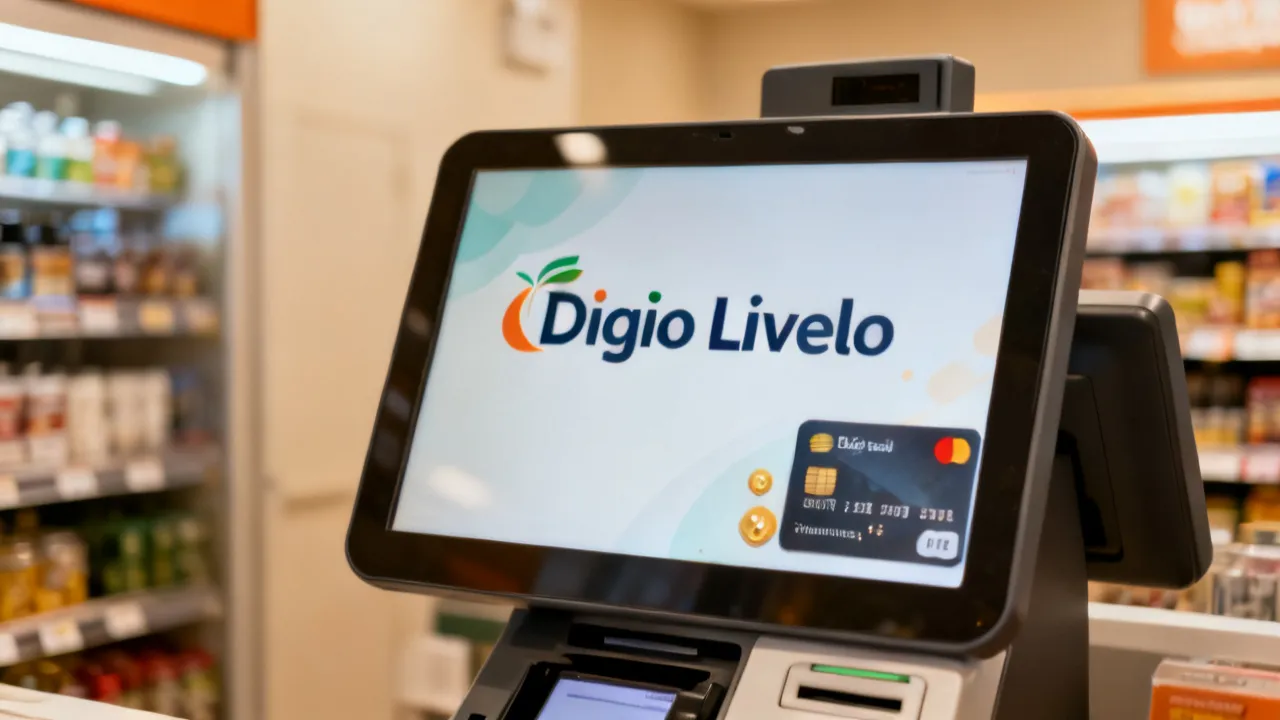
Digio Livelo Guide: How It Works and What to Check
This guide explains Digio Livelo’s mechanics, from eligibility and redemption logic to practical evaluation points before you choose. Background context outlines what Digio and Livelo generally represent in reward ecosystems, the role of suppliers, and why careful comparison matters. The article remains objective, focusing on real-world decision criteria rather than promises.

Maximizing Benefits with Cash Rewards Cards
This comprehensive guide explores the nuances of using Cash Rewards Cards to maximize financial benefits. With a focus on how consumers can harness these cards for cost-efficiency, the article provides an in-depth examination of their functionality, various reward structures, and strategies to optimize their use. Featuring professional insights, the piece serves as a detailed resource for anyone looking to enhance their purchasing power through strategic card usage.

The Comprehensive Guide to Cash Rewards Card
Discover how a Cash Rewards Card can transform your spending habits and financial health. These cards offer users points for money spent, which can be redeemed for cash. Utilizing a rewards card effectively can bring significant benefits, but understanding the terms, fees, and management practices is essential for maximizing rewards and avoiding debt.

Understanding Calcard Sinop for Industrial Supply Decisions
This guide explains how Calcard Sinop fits into industrial procurement decisions, focusing on how buyers compare supplier options, specification compatibility, and delivery reliability. The background sections objectively define what the term typically refers to in supply contexts and why sourcing discipline matters. Readers also get practical criteria for evaluating offers and a detailed FAQ for smoother, risk-aware purchasing.

Understanding Digio Livelo: Pricing, Suppliers, and Use Cases
This guide explains how Digio Livelo works in practice, focusing on pricing structure, supplier relationships, and what to expect when evaluating offers. It also provides objective background on common loyalty-to-reward ecosystems, typical procurement and compliance steps, and how businesses compare options without assuming outcomes.

Calcard Sinop: Industry Overview and Sourcing Guide
Calcard Sinop products are evaluated here as a practical sourcing and compliance guide. The article objectively explains what “Calcard Sinop” commonly refers to in commerce and supply contexts, outlines selection criteria, discusses supplier considerations and procurement conditions, and provides a comparison table, step-by-step checklist, and FAQs to help buyers make defensible decisions.