This guide explains how to evaluate suppliers and verify sourcing details for 77991104434, focusing on pricing discipline, documentation, and quality checks. Objectively, such numeric identifiers and product references are typically used in inventory control, procurement, and logistics. The article also outlines practical conditions, a comparison view, and an execution plan for safer purchasing decisions.
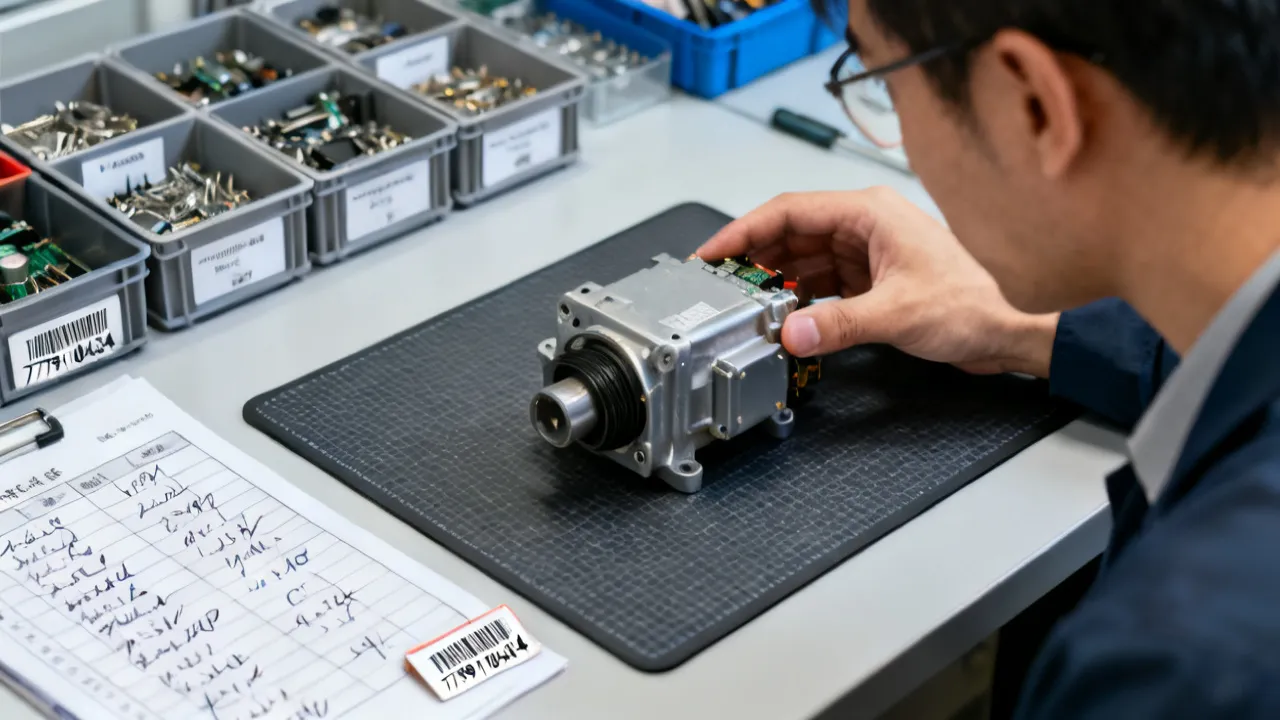
If you’re dealing with the reference number 77991104434 as part of procurement, repair stock, or inventory matching, the very important step is to confirm that your chosen supplier can reliably provide the correct item—consistently, with traceable documentation and pricing transparency. This article takes an industry-minded approach to help you assess whether a supplier can meet quality expectations and fulfillment timelines, while also addressing common sourcing risks that arise when a reference number is treated as “self-explanatory.”
In real procurement workflows, numbers like 77991104434 frequently function as internal part identifiers, warehouse codes, or logistics references. The same sequence can appear across different catalogs, revisions, or packaging formats, which is why verification matters as much as price. In sourcing decisions, “what you receive” must match “what you ordered,” not just in appearance, but in specifications, revision level, and handling requirements.
To support your evaluation, you’ll find a practical supplementation section later that includes a comparison table (without links), a step-by-step checklist, and conditions/requirements. If your scope includes broader terms such as '' '' '''' '' '' (as provided), the same verification logic applies: clarify the exact item identity, confirm revision and compatibility, and standardize documentation.
From an expert procurement perspective, a reference number alone is rarely sufficient. Identifiers can be used differently depending on the supply chain stage—manufacturer labeling, distributor warehouse systems, third-party listing formats, or service parts catalogs. Even when two listings share the same number, they may correspond to different packaging quantities, revision codes, or accessory bundles.
Therefore, when evaluating 77991104434, you should treat it as a starting point for a verification process that covers:
These checks are not bureaucratic extras. They reduce failure risk—especially in settings involving electronics modules, industrial parts, and components where compatibility and revision matter. When a mismatch occurs, the “cost” is often much more than the purchase price: you may face downtime, rework, scrapping, missed production schedules, expedited shipping, or returns processing.
A common sourcing failure mode is the belief that an identifier behaves like a perfect global key. In practice, 77991104434 could be entered into systems in multiple ways:
As a result, if you purchase solely based on the identifier, you may receive something that is “close enough” to pass a quick visual inspection but still fail during integration, testing, or long-term operation.
People often search for “price” first, but an expert view is to evaluate price discipline—the difference between a low headline cost and a high total cost due to returns, rework, downtime, or shipping surcharges. When a supplier quotes a price for 77991104434, ask how that price is structured: unit cost, MOQ rules, shipping terms, lead time, and whether taxes and customs are included.
Also remember that supplier behavior can be inferred from how they quote. Reliable suppliers tend to be explicit about:
If any of these are missing, it becomes harder to verify whether “cheap” is actually economical. In many organizations, a quote that is missing key commercial terms becomes difficult to approve for purchase because it increases project risk. That risk may be unacceptable in regulated or high-reliability contexts.
When procurement teams evaluate a supplier for an identifier like 77991104434, they generally apply layered checks rather than relying on one signal. Below is an objective framework aligned with how many professional sourcing teams work.
Request a written confirmation that includes at least:
This reduces the chance that “the number matched in the order form” but the physical item does not. It also gives you a documented baseline against which incoming inspection can be compared.
In addition, ask the supplier how they interpret 77991104434 internally. For example, you want to understand whether it maps to:
Getting clarity on that mapping helps ensure that the supplier’s internal catalog aligns with your technical acceptance needs.
For many component categories, traceability is a practical quality control mechanism. Ask for documentation appropriate to your risk profile, such as:
Be cautious when a supplier cannot provide basic documentation. In regulated or high-reliability environments, that’s a red flag. In lower-risk environments, it may still be a warning sign, especially if your operations depend on consistent revision/spec alignment.
Traceability also matters because it supports root-cause analysis if something fails. If you ever need to answer questions like “Which supplier delivered the component that failed test at serial number X?” you’ll want the documentation to line up with what was received. Without traceable documentation, you might not be able to isolate the failure source effectively.
Even when the correct item is supplied, damage can occur through poor handling—particularly for sensitive components. A quality-minded supplier will describe handling procedures (anti-static precautions, packaging protection, and shipping method). Ask how the supplier stores and ships items matching 77991104434.
To make this practical, you can request details in a structured manner:
These questions often reveal operational maturity. If a supplier answers vaguely (“We ship normally” or “Standard packaging”), you may not receive an item in the condition required for your assembly and testing processes.
Instead of focusing only on the quoted figure, evaluate the entire commercial structure:
This is how you compare suppliers fairly and avoid hidden costs. For instance, a supplier might offer a lower unit price but impose higher shipping costs, longer lead time, or strict non-return policies—each of which can raise the effective cost.
Also pay attention to how the supplier communicates uncertainties. If they cannot confirm lead time, ask what drives it. Is it dependent on manufacturing availability? Are they waiting on a distributor allocation? Do they use partial shipment? The procurement risk you face depends on the supplier’s ability to commit to timelines and to manage exceptions.
In professional procurement, responsiveness is not just courtesy—it’s a proxy for operational maturity. Ask specific questions about 77991104434 and see whether the supplier answers with concrete information (e.g., revision details and documentation), or with generic claims.
Reliable suppliers tend to:
When the supplier’s answers are vague or inconsistent, you should treat that as a sourcing risk. In practice, inconsistent answers often indicate that the supplier’s internal mapping from 77991104434 to the physical item is unclear, or that they are not fully capable of guaranteeing the revision and specification you require.
Beyond responsiveness, look for consistency across communication channels. For example, if the email quote lists one revision, but the quotation document lists another, that discrepancy should be treated as a problem to resolve before purchase. Even minor inconsistencies can indicate catalog drift or data entry errors.
Below is a structured approach that you can apply whether you are sourcing for repair, procurement, or replacement inventory. The objective is to reduce mismatch risk and improve confidence in the final shipment.
To strengthen pre-order verification, you can also specify your acceptance test plan. For example, if your organization performs a functional test after receipt, you can ask the supplier whether there are any known constraints related to revision differences. Suppliers with experience in your component category may be able to flag typical integration issues.
If the component is part of a service environment, you may need additional data for compatibility. Ask whether 77991104434 is:
Even if you don’t receive detailed engineering answers, the supplier’s ability to respond knowledgeably can be an indicator of how closely they control their sourcing quality.
A practical tip is to put the key verification data directly into your internal purchase order fields (where possible). That way, your receiving team can compare physical labels to the documented revision/spec requirements without hunting through emails. When internal data is not standardized, receiving errors increase—especially when multiple similar parts are in transit.
Another control is to limit the ambiguity of “equivalent” language. If you allow equivalence, define what equivalence means. For example, equivalence might be limited to electrical performance but not to mechanical dimensions, or it might be limited to a specific revision range. The supplier should agree in writing with that definition.
This process aligns with quality management principles used across procurement and supply operations. In many organizations, the receiving step is where “verification” becomes real. It’s the moment you ensure the supplier’s promise matches the physical shipment.
For receiving, consider a checklist format that your team can follow consistently. Doing so reduces the chance that one person checks a revision field while another overlooks it. Consistency improves both quality outcomes and the strength of any claims you make during returns or disputes.
Because you asked to integrate additional information as a supplement slightly later in the article, the section below is organized as a comparison table, a source overview, and a step-by-step guide with conditions/requirements. Note: no external links are provided in the table, per your instruction.
| Evaluation area | Lower-readiness supplier | Higher-readiness supplier |
|---|---|---|
| Item identity confirmation | Provides the number but no revision/spec clarification | Confirms manufacturer, revision level, and compatible equivalence (if applicable) |
| Documentation availability | Generic paperwork or missing batch/lot details | Provides item-specific documentation and traceable batch/lot/labeling information |
| Commercial transparency | Unclear inclusions, vague lead time, unclear return conditions | Explicit pricing structure, lead-time clarity, and documented returns/warranty steps |
| Quality and handling | Minimal packaging/handling description | Describes storage and protective packaging appropriate to the component type |
| Responsiveness | Slow replies; answers don’t map to your questions | Quick, specific replies that address identifier 77991104434 and related requirements |
To ensure this guidance stays grounded, the recommendations above reflect widely used procurement and quality-control principles consistent with:
For readers who need formal standards documentation, consult your organization’s procurement quality procedures and the relevant ISO/quality framework applicable to your sector.
Even without naming a specific standard number here, the underlying idea is consistent: if you treat sourcing as a risk-managed process, you can reduce mismatch, improve traceability, and protect downstream operations. That mindset is especially important when reference numbers like 77991104434 might be reused across catalogs or revisions.
To make the workflow actionable, you can create a “source verification packet” for each purchase. That packet might include: the quote, the supplier’s written identity confirmation, the datasheet revision reference, your purchase order description, and a receiving checklist template. If a dispute arises, having the packet available quickly can reduce delays.
In addition, you may want to define “reject criteria.” For example: if the revision on the label differs from the revision in your order confirmation, the shipment might be automatically rejected. Or, you might accept the shipment but require supplier remediation. Explicitly defining these conditions before the part arrives prevents confusion and reduces negotiation time.
Even well-intentioned buyers can experience sourcing failures when they assume that a reference number is enough. Typical risks include:
Addressing these risks is the reason your sourcing workflow should be documentation-driven.
There are also “process risks,” such as:
By addressing these process risks, you strengthen the entire procurement lifecycle from quote to acceptance.
In many procurement contexts, 77991104434 is used as an identifier such as a part number, internal catalog reference, or logistics code. Because similar numbers can appear across catalog revisions or distributors, you should confirm manufacturer, revision/spec, and packaging details before purchase.
Ask the supplier to provide identity confirmation that includes manufacturer name (if applicable), revision level, and spec/datasheet excerpts. Also request clarity on whether the offer is an exact match or an equivalent replacement, and confirm packaging quantity.
Not automatically. A lower price can become more expensive once you factor in shipping terms, lead time, return costs, and rework. Evaluate the total procurement cost by comparing commercial terms and documentation sufficiency—not just the headline number.
At minimum, request item-specific documentation that aligns with the order: revision/spec confirmation and traceable labeling details. Depending on your industry requirements, you may also request inspection/test reports or batch/lot information.
Verify the label and revision match the supplier’s documentation, inspect packaging integrity, and record batch/lot/serial details where available. If anything diverges from the agreed acceptance criteria, escalate within the return window specified in your order terms.
Use a structured workflow: require spec-aligned quotations, confirm documentation sufficiency, set written return/warranty terms, and establish acceptance criteria. If possible, request pre-shipment confirmation or inspection tailored to 77991104434.
When keywords arrive as unclear placeholders, treat them as non-actionable text unless the source context clarifies the meaning. Your real action should be based on verifiable identifiers like 77991104434, plus corresponding specifications and supplier documentation.
No specific city or country was provided in the content you submitted. If you later add a location, replace it with “nearby” as instructed, and tailor supplier evaluation considerations to local logistics, import handling, and typical delivery constraints.
When sourcing using 77991104434, the very professional approach is to treat verification as a routine part of purchasing—just like you would for critical components in industrial maintenance or procurement. You’ll gain leverage by demanding clear identity confirmation, traceable documentation, and explicit commercial terms. That discipline reduces costly mismatches and supports steady operational outcomes.
If you share the actual product category associated with 77991104434 (for example, electronic component, industrial part, or service part) and what “price” figure or supplier context you’re working with, the workflow above can be refined into a more targeted checklist for your exact use case.
To make the sourcing guidance more than a “best practice,” many teams convert it into measurable acceptance criteria. This is where verification becomes operational. Instead of saying “make sure it’s correct,” you define what “correct” means in a way that receiving inspectors and technical evaluators can follow.
For an identifier like 77991104434, acceptance criteria often include both document-based and physical checks:
Once you define these, you can treat deviations in a graded way. For example, a label mismatch might trigger rejection, while a minor packaging issue might trigger inspection or supplier replacement depending on your risk tolerance.
An acceptance matrix is useful when you have multiple stakeholders—procurement, quality, engineering, and warehouse operations. Below is an example template. Replace the fields with what applies to your component category.
| Check | What “Pass” looks like | What “Fail” looks like | Action |
|---|---|---|---|
| Part identifier | Label contains 77991104434 as specified | Different identifier or unclear label | Reject shipment; contact supplier for correction |
| Revision/spec | Label revision matches the revision/spec in supplier confirmation | Revision differs or spec cannot be verified | Reject or isolate for engineering review; escalate |
| Packaging integrity | Packaging intact; no damage; correct protective materials present | Crushing, torn ESD wrap, broken seals, missing protectors | Inspect for damage; if damaged, reject and document evidence |
| Quantity | Delivered quantity matches order and packing list | Short/over shipment or incorrect pack configuration | Recount; reconcile with packing list; claim discrepancy |
| Traceability docs | Batch/lot or serial docs provided if required | Documentation missing or not corresponding to shipment | Hold inventory; require proper docs before release |
This kind of matrix reduces negotiation time because everyone is aligned on what constitutes a pass/fail outcome. It also makes supplier disputes more objective.
Even with a strong checklist, you can still end up with mismatches if supplier communication is ambiguous. For 77991104434, you can reduce ambiguity by using structured wording.
Here are communication tactics procurement teams often use:
You can also ask for a “reference mapping.” For example: “In your system, what does 77991104434 map to—manufacturer part number, revision, and packaging configuration?” If the supplier can’t answer at that level, you may need to adjust your sourcing approach.
Lead time risk is another major factor in procurement outcomes. Even when you get the right item, delayed delivery can cause operational issues. When the supplier quotes lead time for 77991104434, ask the right questions:
In supply chain terms, an “on-time delivery” promise is only meaningful if it is backed by operational capacity and exception handling. Suppliers that provide accurate commitments typically have better internal controls, which often correlates with better item identity control.
For inventory planning, consider buffer stock. If you’re buying 77991104434 for repair inventory, you may not need immediate delivery for every item. But for active production lines, you might need tighter lead time certainty. Your verification approach should align with that urgency: the more urgent the need, the more important it is to verify early and to avoid substitution.
Returns and warranties can be misunderstood in procurement negotiations. A supplier might offer a general return policy, but the details matter—especially if the mismatch involves revision/spec differences. Before purchase, ensure you understand:
Also ask about dispute resolution process. If there is a mismatch on 77991104434, you want a clear pathway: who decides, what evidence is required, and what timeline you can expect for replacement credit or shipment correction.
A practical step is to require “evidence-based returns.” That means you document label details, revision markings, packaging condition, and any test failures that indicate non-compliance. Suppliers that are prepared for this process usually have stronger quality assurance and better customer support.
Documentation is not just a formality. Good documentation is specific, correlates to the shipped unit, and supports traceability. Poor documentation often exists in one of these forms:
For 77991104434, request documents that allow you to connect the chain: order → supplier identity confirmation → packing list → physical label → acceptance criteria. When that chain is intact, verification becomes strong and procurement risk decreases.
In many component categories, environmental conditions matter. Even if the identifier is correct, the item might degrade if exposed to moisture, heat, or electrostatic discharge beyond its tolerance.
Ask the supplier how they store 77991104434 items before shipment and what protections they use. Depending on the component type, this might include:
Why this matters: if your item fails incoming tests due to environmental exposure, you may face delays diagnosing whether the issue is inherent to the component or caused by handling and storage. Suppliers that control storage conditions are more likely to provide the correct item and preserve its usability.
In many systems, compatibility is not purely determined by the part number. Even within a single identifier like 77991104434, different revisions might require different integration steps.
Examples of compatibility areas that may vary across revisions:
Therefore, when you confirm identity, also confirm compatibility assumptions. Ask the supplier if there are known integration considerations for your equipment. If they cannot provide details, you might still proceed—but you should plan for additional incoming testing and possible engineering validation.
A frequent failure is when procurement verifies documentation, but receiving does not check the same fields. That can happen when teams use different templates or when purchase descriptions are not explicit enough for receiving inspections.
To align teams:
When procurement and receiving act on the same criteria, mismatch risk drops significantly.
If any of the following occur, it’s often wise to pause and ask deeper questions before completing payment:
Pausing may cost time, but it typically prevents larger losses caused by incorrect parts. In procurement, time spent verifying early is often cheaper than time spent resolving mismatches later.
Not all procurement needs the same verification intensity. You can tailor the verification approach for 77991104434 by risk category:
This risk-based approach helps you allocate effort where it matters and avoids overburdening lower-risk procurement workflows.
Your initial content included blank keyword placeholders like '' '' '''' '' ''. In practice, ambiguous keywords can cause confusion in search results and supplier catalogs. If you must use keywords, treat them as supplementary, not authoritative. Your authoritative anchor is the verifiable identifier 77991104434 plus the revision/spec and packaging details confirmed by the supplier and supported by documentation.
When you combine structured procurement language, measurable acceptance criteria, and traceable documentation, you turn sourcing from an “assumption-based” task into a controlled process. That is the difference between buying parts and successfully managing risk.
Striking the Perfect Balance: Navigating Premiums and Out-of-Pocket Expenses in Senior Insurance Plans

Explore the Tranquil Bliss of Idyllic Rural Retreats

How to Make Lasting Memories at Disneyland Attractions

Affordable Phones and Plans for Seniors

Affordable Full Mouth Dental Implants Near You

Unlock the Top Kept Secrets to Finding Your Ideal Dentist for Flawless Dental Implant Results!

Discovering Springdale Estates

Unveiling RS Sul Telecom Services

The Guide to Car Trading


Understanding Londonderry Towers: Location, Value, and Options
This guide explains what Londonderry Towers represents in the local property landscape and how to evaluate living there with a practical, expert lens. Objectively, it discusses how towers influence rental demand, day-to-day convenience, and resale considerations, while outlining the questions tenants and buyers should ask. It also includes conditions, a comparison table, and FAQs to support informed decisions.

Understanding Pinto Aminadabes and Contact-Based Sourcing
This guide explains how to evaluate contact-led sourcing practices, including Pinto Aminadabes and the email address [email protected], with a disciplined, objective approach. It reviews background context on how supplier communication, documentation, and procurement controls affect reliability, response quality, and downstream risk.

Ade Sara: Objective Guide for Buyers and Users
This guide explains how to evaluate Ade Sara carefully, from purpose and sourcing to quality checks and decision criteria. It provides objective background on what “Ade Sara” refers to in the market, common buyer concerns, and practical expectations for supplier verification, labeling review, and product compatibility.

Understanding Mckenna 1993: Context, Methods, and Use
This guide explains the academic and practical context behind “Mckenna 1993,” clarifying how the term is commonly referenced and what researchers typically look for when citing it. Objectively, “Mckenna 1993” is an identifier used in scholarly writing to point to a specific 1993 publication. Background notes cover why citation discipline, methodology clarity, and verification matter in research.

Understanding 25373994391 in Supply Chain Procurement
This guide explains how the reference “25373994391” can be used to support procurement, inventory tracking, and supplier coordination. Objectively, it discusses what numeric item identifiers typically represent in logistics systems, how suppliers manage documentation, and what buyers should verify to reduce receiving errors, delays, and reconciliation issues during warehouse operations.

Maju: Objective Guide to Understanding Its Meaning
This guide explains “Maju” in a clear, objective way—covering its common usage, contextual interpretations, and practical considerations for readers who encounter the term in business, culture, and everyday life. “Maju” is a widely recognizable word in multiple contexts, so understanding tone and setting matters for accurate interpretation.